Find the equipment details first
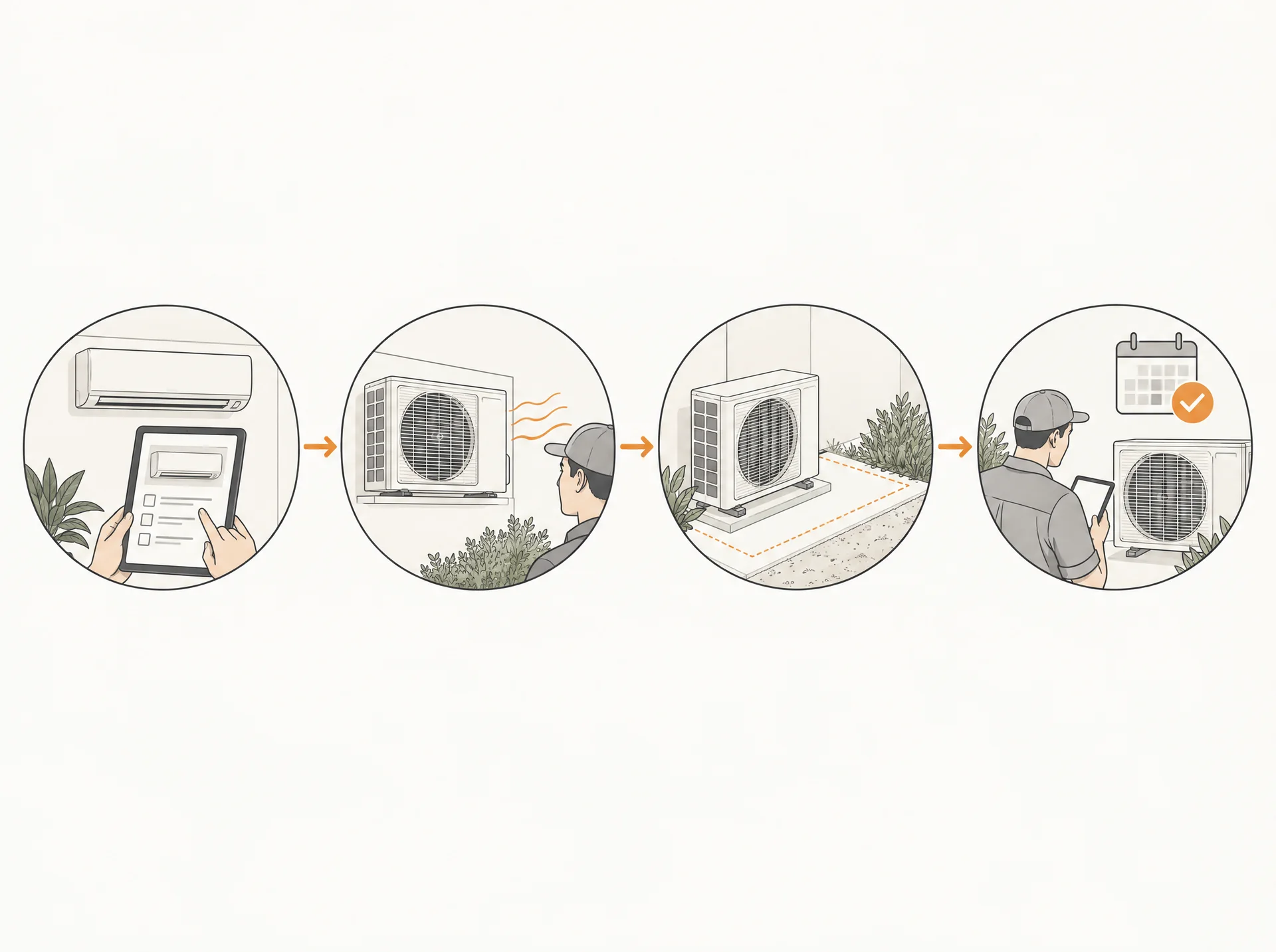
Record the make and model, controller type and any available service history. If the property has several units, give each one a simple location name. This makes it easier to describe a problem and request the correct service.
Read the manufacturer’s owner instructions for routine care. User-accessible filter care varies by system, and equipment in ceilings or difficult locations may require a service visit rather than household access.
Check ordinary operation early
Use the normal controls and note whether the system starts, responds to settings and conditions the expected rooms. Record unusual noises, error messages, smells or indoor water leakage. An intermittent problem is easier to investigate when its circumstances are written down.
Do not repeatedly restart a unit that is showing a fault or open equipment covers to investigate. Electrical compartments, refrigerant circuits and unsafe access are outside a household preparation checklist.
Look at the surrounding space
From a safe position, check whether stored items or vegetation obstruct the outdoor unit’s service area. Indoors, consider whether furniture or curtains block supply or return-air paths. Follow the equipment instructions for clearances rather than choosing a universal distance.
If clearing the area would involve heights, damaged equipment or uncertain hazards, include it in the service enquiry. The aim is to make access and conditions known, not to turn preparation into repair work.
Book a scope that matches the concern
Routine maintenance and fault diagnosis are different requests. A system that has gradually become noisy or leaks indoors needs the symptom reported when booking. Ask what checks and cleaning are included and how additional repair work will be proposed.
For a rental or strata property, confirm the approval and access process. For a workplace, identify times when the system can be unavailable and any rooms with critical cooling needs.
- Equipment details and service history.
- Observed symptoms and displayed codes.
- Access to indoor and outdoor equipment.
- Required approval contact and operating hours.
Keep a short symptom record
Describe the symptom in terms the service provider can investigate: which unit, which room, what the controller displayed and how long it had been operating. Note whether the issue happens consistently or only under particular conditions. A clear photograph of an error message or accessible model label can be more useful than describing the unit as not very good.
Observe the system only through normal use and follow the owner instructions. Do not remove covers or repeatedly restart equipment that is reporting a fault. If you notice a burning smell, electrical damage or another immediate hazard, stop using the affected equipment and seek appropriate assistance rather than continuing a routine checklist.
Prepare a property with several units
Give each unit a useful location name, such as front office or upstairs bedroom, and match its model details and symptoms to that name. A building can contain equipment of different ages and types; a single photograph of the controller may not describe the whole installation. List which units need routine attention and which have a reported fault.
Identify how each indoor and outdoor component can be reached. A unit above a meeting room, in a locked service area or beside stored goods may need access arranged with different people. Give the service provider that information before the visit so the scope and timing reflect the whole property.
A planning example: one bedroom remains uncomfortable
Suppose the living areas seem comfortable but one bedroom does not. Record the room, the zone setting, when it is occupied and whether the issue changes with normal door positions. Explain any recent change, such as furniture moved across an outlet or a room becoming a daily office. Do not assume a larger outdoor unit is the answer.
A useful assessment explains the observations and the proposed next step. That may involve servicing, control review or further investigation, depending on the system. Keep the completion notes with the equipment records and ask which symptoms should prompt another call. If a part or repair remains outstanding, record it separately from maintenance that has been completed.
- Unit location, model and controller.
- Normal operating settings when the symptom appears.
- Affected rooms and any recent changes.
- Accessible photos and previous service records.
- Agreed visit scope and the method for reporting findings.
Does weak cooling mean it needs more refrigerant?
No. Airflow, controls, heat load and equipment faults can produce similar symptoms. Refrigerant work requires an appropriate licensed practitioner and should follow diagnosis. A seasonal top-up should not be assumed to be routine maintenance.