Your project, in focus.Explore the details
What we can help with.
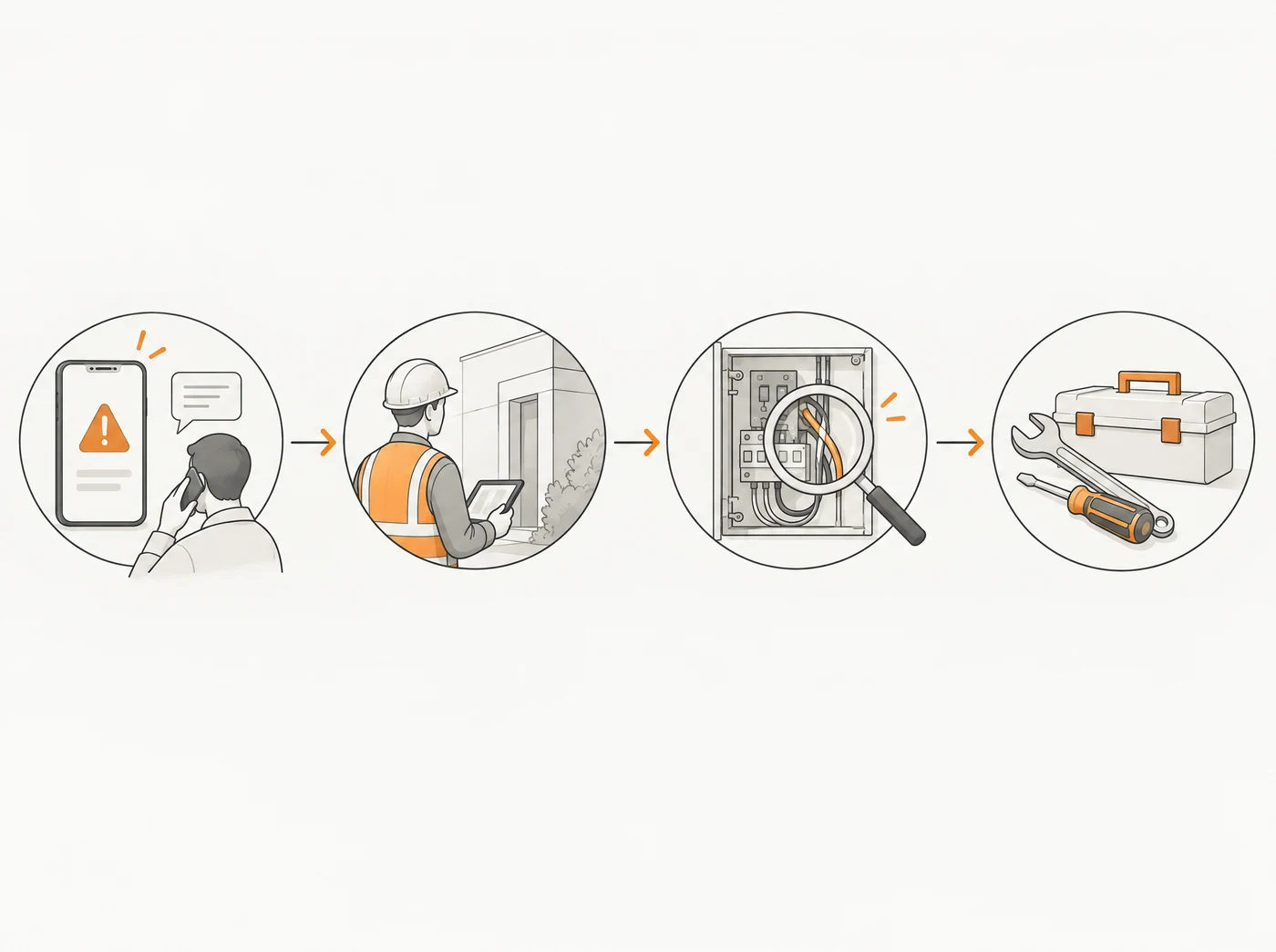
- Investigate repeated tripping, lost power and faulty fittings before choosing a repair.
- Tell us what stopped working, what was running and whether the fault comes and goes.
Scope and site details
- State whether the request concerns one appliance, a fixed circuit or the entire premises.
- A diagnostic visit may establish that the fault belongs to equipment, building wiring or the external supply.
- Access to concealed areas or a fault that appears only in rain can require a staged investigation.
- Keep initial diagnosis and later repair approval separate where the cause is unknown.
What matters for your job.
- A circuit fault, an appliance fault and a supply interruption can look similar to an occupant.
- The investigation needs to identify the cause and the affected area, then separate immediate safety work from any wider improvement.
Before we visit.
- Affected rooms and equipment
- When the fault first appeared
- Any recent electrical or building work
- Photos of visible damage taken safely
More to consider
- Keep people away from damaged equipment and report burning smells, visible damage or any electric shock when arranging help.
- Never continue resetting a device that repeatedly trips.
- For immediate danger, contact emergency services; attendance and availability must be confirmed by phone.
A clear handover.
- Ask for the diagnosed cause, repair performed and any remaining limitation to be explained.
- An intermittent fault may require monitoring or a further visit if it could not be reproduced.
- Record the conditions of any recurrence rather than treating a temporary return of power as proof of resolution.
Can the repair be priced before the fault is located?
- A known damaged component may allow a defined scope.
- Intermittent or concealed faults often require diagnostic time first, with repair options explained after the cause is established.
What information helps with an intermittent fault?
- Note the time, weather, equipment running and areas affected during ordinary use.
- Do not recreate a dangerous condition or repeatedly reset tripping equipment. A safe record of the symptoms helps the investigation.