Use one list with clear priorities
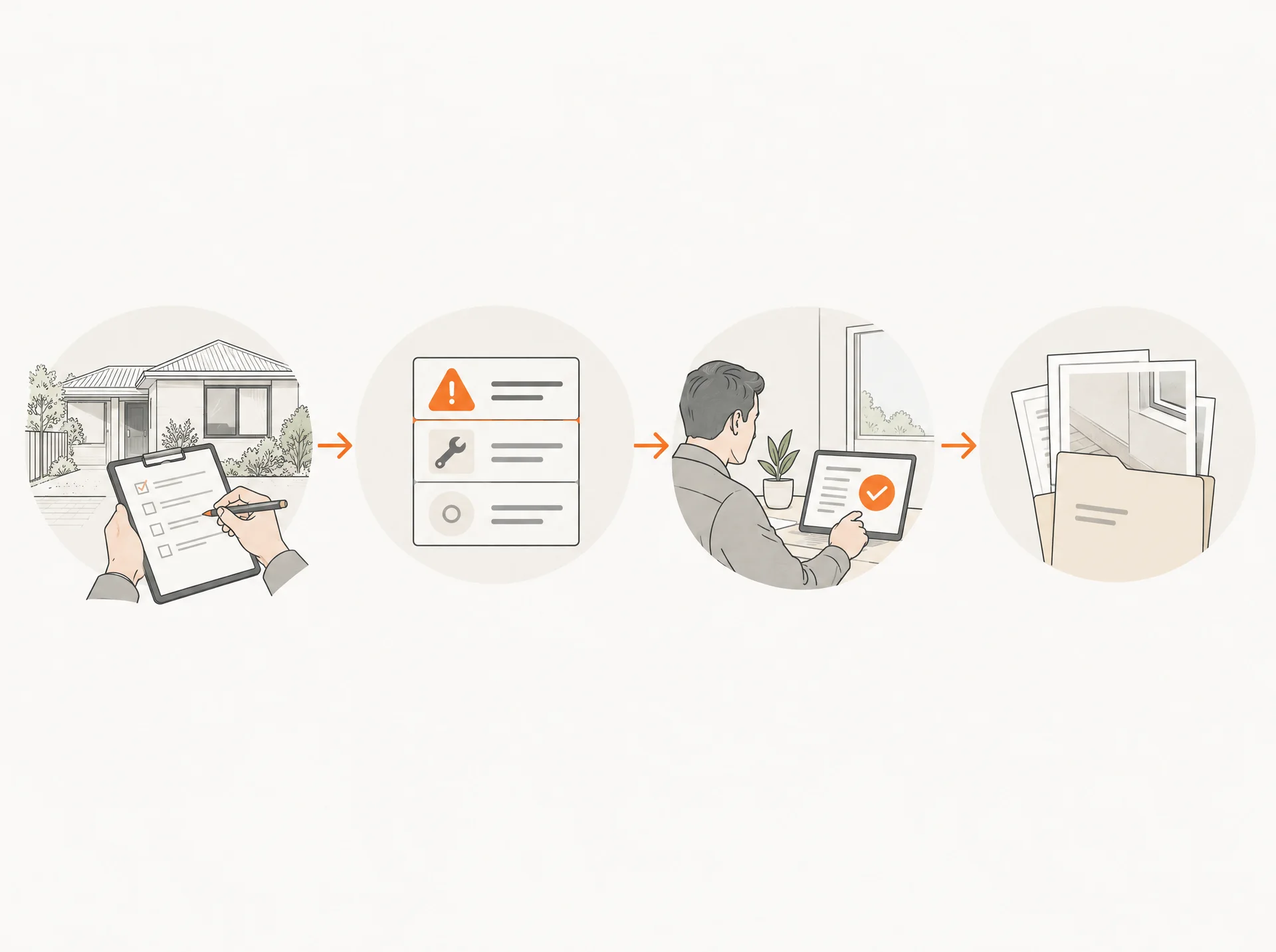
Record the location, symptom, date reported and supporting photos for each issue. Distinguish immediate safety concerns, active damage and routine upkeep. A dripping mark on a ceiling and a chipped skirting board should not disappear into the same undifferentiated list.
A maintenance checklist supports organisation; it does not replace the tenancy agreement or current legal responsibilities. Use the relevant WA guidance and the property manager’s process when deciding access, notice and responsibility.
Inspect by area and by system
A room-by-room walk helps catch visible defects, while a system list helps track equipment spread across the building. Consider doors and windows, wall finishes, roof drainage, gardens, irrigation, heating and cooling, electrical concerns and any security equipment.
Record what is observable without unsafe access or dismantling. A stain may show that investigation is needed, but it does not establish the cause. Specialist systems need the appropriate trade assessment.
- Interior: operation, damage and signs of moisture.
- Exterior: drainage, gates, paths and garden condition.
- Equipment: model, known faults and service history.
- Records: prior repairs, approvals and follow-up dates.
Separate repair from improvement
A failed latch, repainting an entire room and upgrading a working air-conditioner are different decisions. Describe the immediate defect and any proposed improvement separately so the owner can approve a clear scope.
For recurring problems, retain earlier work records. Repeatedly patching a damp ceiling without resolving the moisture source can lead to further visits and deterioration.
Coordinate access and completion
Confirm who arranges access, communicates with the occupant and approves extra work. Send the contractor relevant photos and the repair history before attendance. Make the agreed boundaries explicit, including making good and waste removal.
After the work, retain the completion record and note any remaining issue. Electrical, smoke-alarm and other specialist records should be kept with the property information where applicable.
Write a work order that can be acted on
A useful work order names the property and the exact location, describes the observed problem and states the result requested. For example, a report that the rear bedroom door will not latch is more actionable than a general request to repair the doors. Add a photograph of the latch and a wider view showing the door, without deciding the technical cause in advance.
Include the approval contact, access process and any spending or scope boundary already agreed with the contractor. If the first visit is an investigation, say so. Keep the findings and any proposed repair together so the person approving the next step can see why it is needed.
A planning example: a stain returns after painting
Suppose a ceiling mark reappears after a cosmetic repair. The record should identify the room, the earlier work and the conditions under which the mark returned. The next request should be to investigate the cause through the appropriate trade, rather than automatically ordering another coat of paint. This is an illustrative maintenance scenario, not a Servicewest project.
Once the cause has been addressed and the surface is suitable for finishing, the patching and paint scope can be agreed. Keeping investigation, rectification and final decoration as distinct steps makes the history easier to follow and avoids treating the visible finish as proof that the underlying issue is resolved.
Use tenancy changes to review the whole record
Before a new occupant moves in, review outstanding repairs alongside the condition report, equipment instructions and keys or credentials. Identify which items are completed, which have an agreed next step and which are optional improvements. Do not assume that a general end-of-lease clean also covers repairs or specialist servicing.
Photographs are most useful when they show location and condition clearly. Keep the original observation and the completion record with dates and a short description. The official property condition report remains separate from a contractor’s work record; one documents tenancy condition, while the other describes the scope performed.
- Property and exact room or asset.
- Observed symptom and date reported.
- Prior repairs and supporting photos.
- Approved action and responsible person.
- Access arrangement, completion record and remaining items.
How often should the checklist be reviewed?
Review it at agreed inspection points, when a fault is reported and before a tenancy change. The timing of particular inspections or service obligations depends on the property and applicable requirements. Avoid inventing one universal annual schedule for every item.