Establish the common-property boundary
Start with the scheme’s relevant plans and records. Identify the spaces and assets included in the maintenance brief and who is responsible for private-lot items. A contractor should not have to infer responsibility from where a defect happens to be visible.
Foyers, stairs, shared gardens, gates, lights and service equipment may involve different trades and access arrangements. List them individually rather than using a broad instruction to maintain the building.
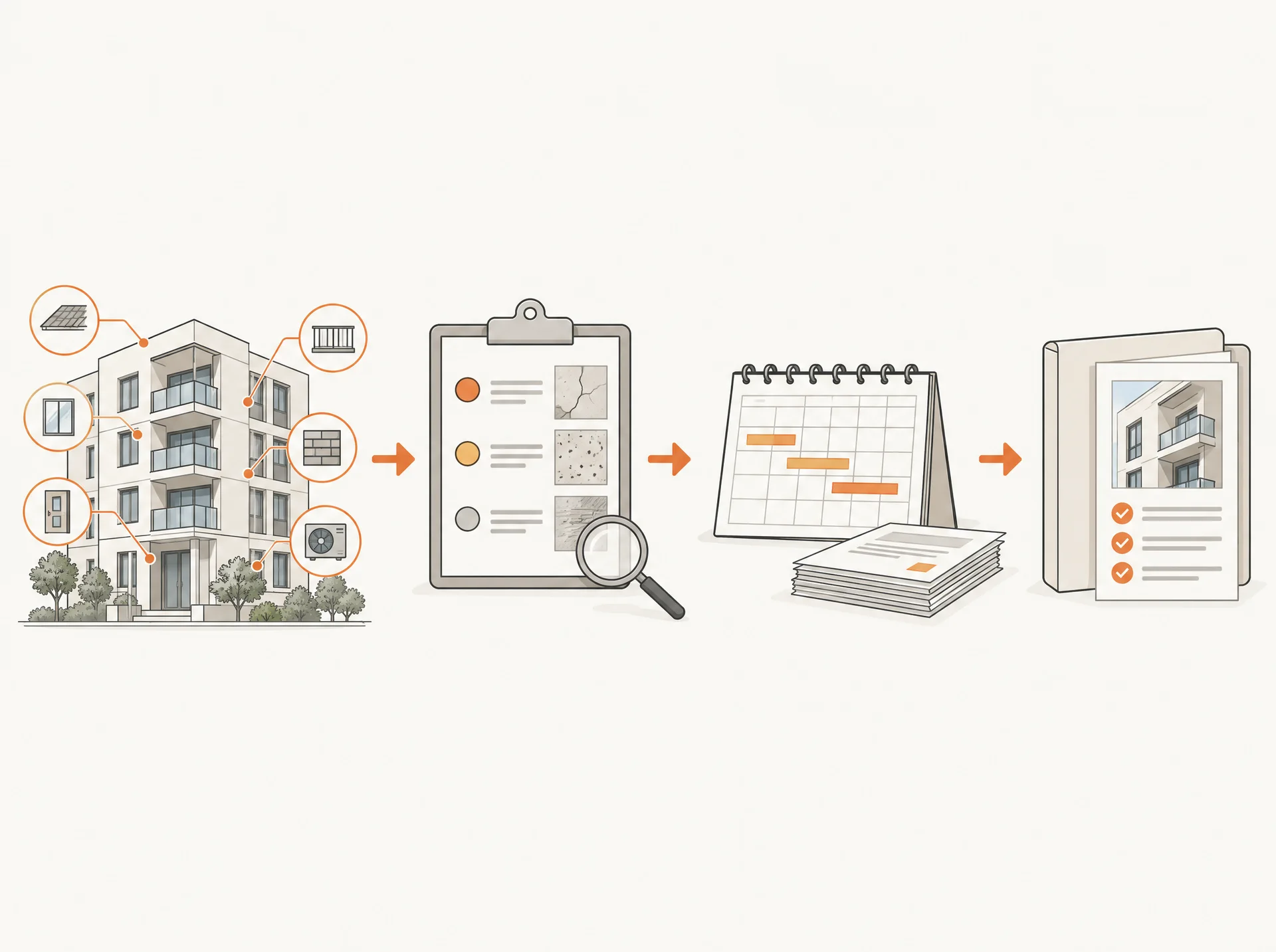
Create an asset and condition record
For each asset, record its location, condition, available service history and responsible contact. Photographs and model details make recurring work easier to scope. Link reported defects to the same record so earlier repairs remain visible.
Separate routine upkeep from specialist servicing, inspections and larger replacement projects. A general maintenance schedule should not imply that it fulfils every statutory or manufacturer requirement.
Set priorities and approval rules
Consider the consequence of failure, how heavily the asset is used and whether delay may cause additional damage. An active water leak has a different priority from repainting a sound wall. Record why an item is urgent so approval can be based on the observed issue.
Agree who approves quotes, variations and access. Define the process for urgent issues without assuming a maintenance provider has authority to spend beyond an agreed scope.
- Asset and location.
- Observed issue and supporting record.
- Responsible trade and approval contact.
- Timing, access and resident communication.
Plan work around residents
Coordinate noisy tasks, temporary access restrictions and cleaning of shared routes. Identify lift bookings, keys, induction requirements and storage limits. Where several trades are involved, sequence dirty or disruptive work before final cleaning.
Completion reporting should state what was done, any limitations and what remains. Keep the record with the asset rather than relying solely on email threads.
Turn a broad contract into identifiable tasks
Instead of a general instruction to maintain the common areas, list the assets: entry doors, pedestrian gates, foyer lights, garden beds and the particular surfaces to be cleaned or repaired. Give each one a simple location reference. A contractor, manager and resident should be able to understand which item a report concerns without interpreting a photograph from memory.
For recurring visits, state the task and expected record. An inspection, a service and a repair are different activities. If a visit only records a defect, make the approval and follow-up route clear so an item does not remain marked as attended while the underlying work is still outstanding.
A planning example: a gate needs repeated attention
Imagine a shared gate that has been adjusted more than once. Bring the earlier reports together and record when the issue recurs, whether it affects all users and which part of the operation fails. The next assessment can then consider the history rather than treating each visit as a new, isolated problem.
A proposed replacement should identify what it resolves, what is retained and whether related access equipment is affected. Compare that scope with a repair option where one is viable. The decision belongs with the authorised scheme contact, supported by the findings and the expected effect on access during the work.
Make resident communication part of the work order
Identify who issues notices and who answers questions about temporary restrictions. The contractor needs practical details such as the available entrance, key collection and work zone; residents need to understand which area is affected and when they can use it again. These are related communications, but they serve different audiences.
After completion, update the asset record rather than relying on an invoice description alone. Record parts or equipment changed, account ownership where relevant, and any limitation or recommended next action. Landgate’s strata resources are the appropriate starting point for questions about common-property responsibility; confirm the actual scheme plan when boundaries are uncertain.
- A location reference for each asset and defect.
- Defined recurring tasks and completion evidence.
- Approval route for repairs and variations.
- Resident notices, access and alternative routes.
- Updated asset records and unresolved actions.
Review repeated call-outs
A recurring gate alignment issue or repeatedly blocked drain deserves a review of the cause. Use the maintenance record to distinguish a new fault from a repeated symptom and to assess whether repair or replacement is the next sensible scope.