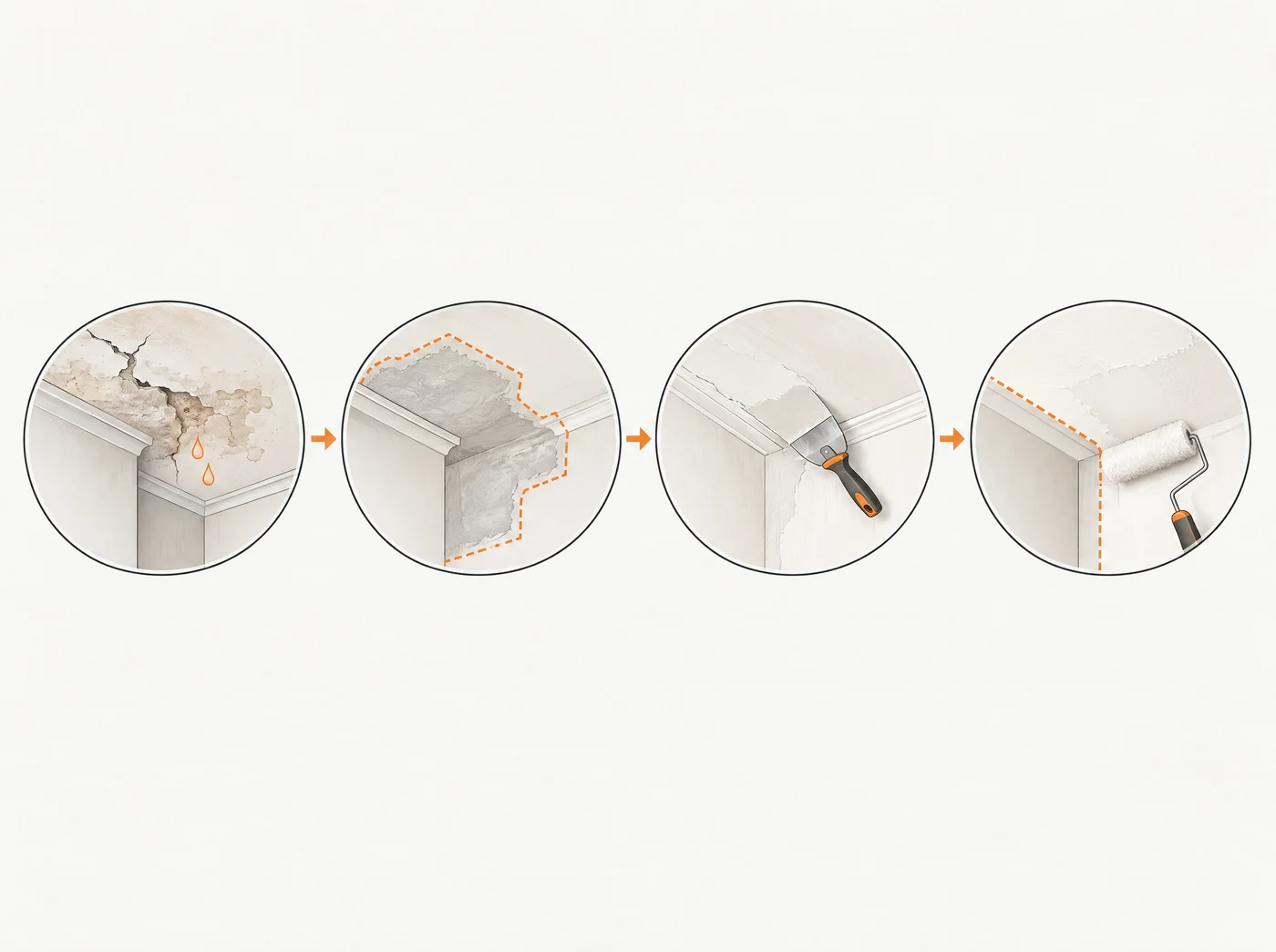
Your project, in focus.Explore the details
What we can help with.
- Repair holes, cracks and damaged lining.
- Investigate moisture or movement separately from the surface repair.
Scope and site details
- Identify the repair area, lining type and desired finish.
- Moisture, movement and damage behind the lining may need separate investigation.
- Insulation, electrical fittings and other services can affect access.
- Make the painting boundary explicit: patching a hole, preparing it for paint and repainting a complete surface are different deliverables that should appear clearly in the quote.
What matters for your job.
- Patch size, existing texture and lighting influence how visible a repair may remain.
- A small patch may still require painting a larger area for a consistent finish.
- Ceiling sagging or continuing movement needs assessment before cosmetic work.
Before we visit.
- Damage location and dimensions
- When it appeared or changed
- Any leak or movement history
- Desired paint and finish boundary
More to consider
- Send wide and close photos and explain when the damage appeared.
- Confirm whether any leak has been repaired.
- Agree the extent of patching, sanding, painting and protection of the occupied room.
A clear handover.
- Check the repair boundary and the agreed painting extent.
- Record any underlying leak or movement that remains under separate investigation.
- A surface repair should not be represented as a structural or waterproofing assessment unless that specialist work was expressly included.
Can a repaired area be made invisible without repainting the wall?
- Sometimes, but colour ageing, sheen and side lighting can make a small touch-up visible.
- Ask the quote to identify the finish area rather than promise a match without inspection.
Should a recurring crack be patched again?
- A recurring crack needs its history assessed before another patch. Photos over time can help identify movement, joint or moisture issues.
- Confirm whether the job covers the visible surface or investigation of the cause. Patching alone does not establish structural condition.