Your project, in focus.Explore the details
What we can help with.
- Work areas, shared amenities and frequently used surfaces.
- Agree desk policies, waste handling, kitchens, bathrooms and common routes.
Scope and site details
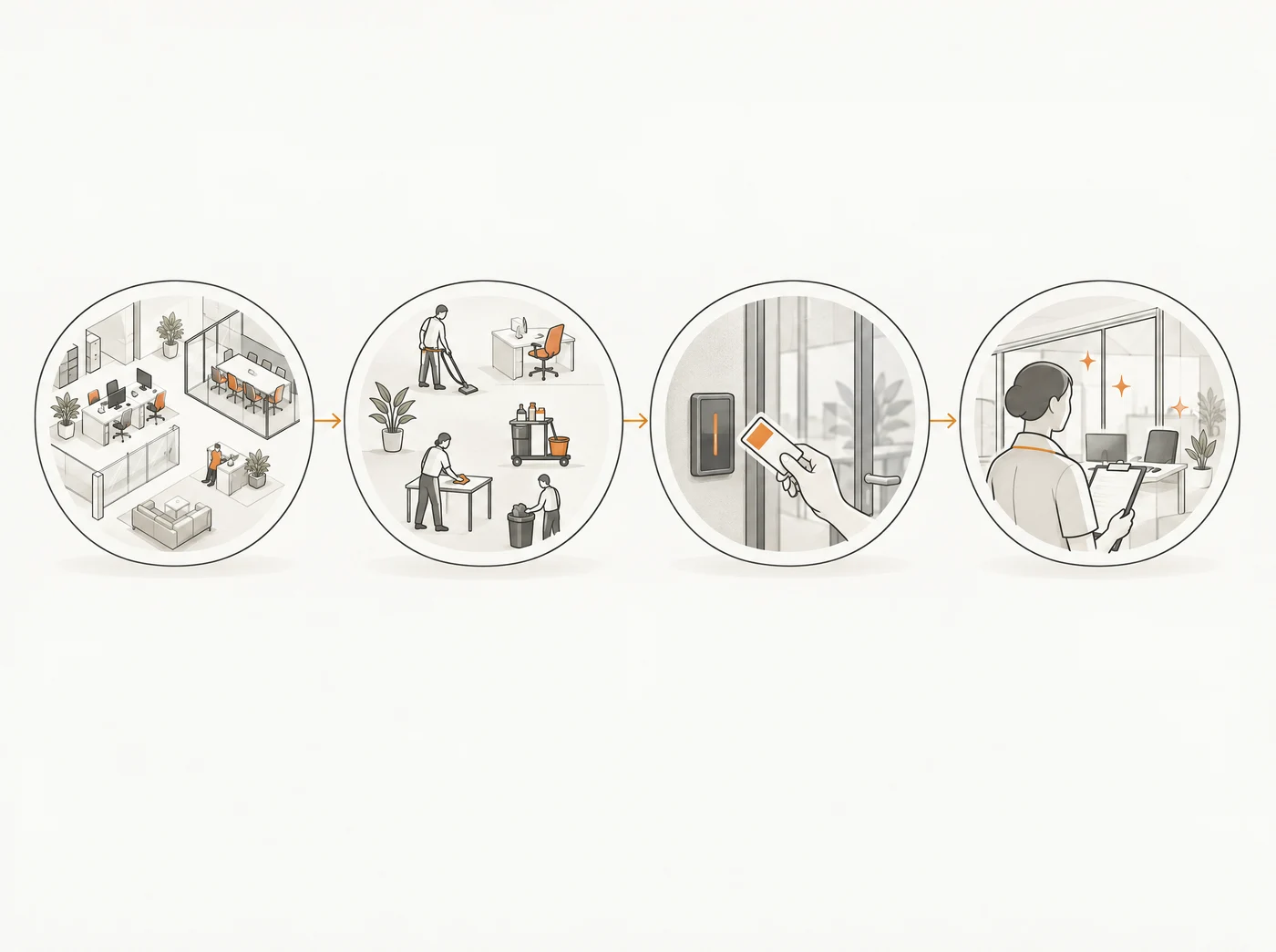
- The office schedule should distinguish desk surfaces, shared equipment, amenities and periodic cleaning.
- Confidential papers and personal belongings need a clear handling policy.
- Consumables, dishwashing and waste streams should be assigned rather than implied.
- Cleaning around occupied workstations may need a different method or time window from cleaning a vacant office after hours.
What matters for your job.
- A busy reception and a seldom-used meeting room may need different frequencies.
- Cleaning around computers, documents and personal belongings requires clear boundaries.
- Periodic floor or upholstery care should be separated from daily tasks.
Before we visit.
- Floor area and staff attendance
- Zone and task schedule
- Desk-clearance policy
- Alarm and lock-up instructions
More to consider
- Provide floor plans, occupancy patterns and access or alarm procedures.
- Agree consumable responsibilities and how staff report missed areas or spills.
- Establish secure entry and lock-up arrangements.
A clear handover.
- Check the nominated areas against the schedule, including waste, amenities and any periodic task due that visit.
- Record access problems and consumable shortages.
- A simple issue log helps distinguish a missed task from an area staff could not make available.
Can occupied desks be cleaned?
- Yes, within a defined policy.
- Decide which surfaces must be cleared by staff and which equipment or documents should not be touched.
Is after-hours cleaning always the best option?
- After-hours work may reduce disruption, but needs reliable access and security arrangements.
- Daytime visits can make communication easier, with quieter methods or temporary restrictions where needed. Agree an alternative contact for access problems.