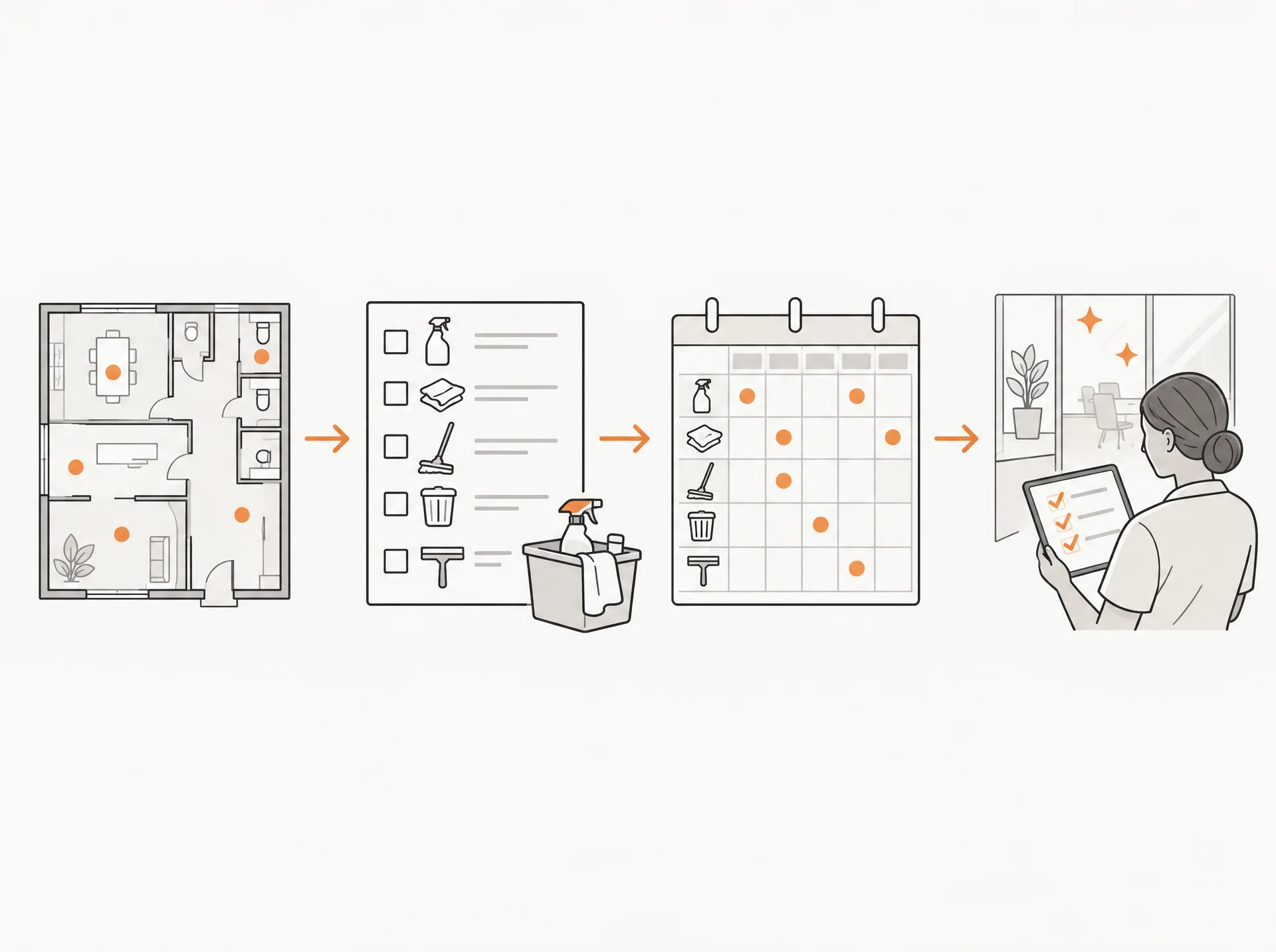
Divide the premises into useful zones
Reception, work areas, meeting rooms, kitchens, bathrooms and storage spaces have different cleaning needs. Record the surfaces and the way each area is used. A broad instruction to clean the office makes it hard to compare quotes or review results.
Visitor traffic, food use and shared touchpoints can help set priorities. A rarely used room may need a different schedule from a busy entrance without being omitted altogether.
Separate routine and periodic tasks
Routine work may include nominated surface cleaning, floor care and waste handling. Periodic work might include carpet treatment, high-access dusting or detailed glass cleaning. Specify the task rather than relying on terms such as deep clean without a definition.
The schedule should also explain who supplies consumables and which waste streams are included. Specialist environments need their own protocols from the operator; a general cleaning service should not imply clinical or food-safety certification.
Set practical access and safety arrangements
Agree entry, alarm and lock-up procedures, including what happens if access fails. Identify areas that can be temporarily closed and how people will be directed around wet floors or equipment.
If cleaning chemicals are stored on site, clarify storage and the relevant product information with the workplace operator. WorkSafe WA guidance explains the need to identify and manage hazardous chemicals in workplace risk planning.
- Zone and surface.
- Task and expected frequency.
- Timing and access requirements.
- Consumables, waste and reporting responsibility.
Make the review concrete
Use the task list to review completion. Record missed tasks, spills or damaged surfaces with enough detail to locate them. Repeated issues may indicate a timing problem, an unclear scope or a method unsuitable for the material.
Review the schedule when occupancy, opening hours or the premises layout changes. A plan written for a lightly used office may be unsuitable after the team grows or public traffic increases.
Describe a result that someone can check
Replace broad language such as maintain presentation with the actual tasks: remove nominated waste, clean the specified kitchen surfaces, attend to accessible touchpoints and clean the agreed floor areas. State any surface or equipment exclusions. This gives both the cleaning team and the site contact a shared definition of the visit.
Keep condition issues separate. A scratched floor, damaged grout or failing sealant can remain visibly marked after appropriate cleaning. Record such items so the team is not asked to solve a repair problem with a more aggressive cleaning method.
A planning example: an office adds a public reception
An office that previously served staff only may add a busy visitor reception. Review the entrance, seating, glass, bathrooms and waste requirements against the new use. The existing contract may still suit the back office while the public areas need a different timing or task arrangement. This example illustrates how to review a schedule; it does not prescribe a frequency for every workplace.
Discuss whether the cleaning team can work while visitors are present or needs a separate window. Agree how a spill or unexpected issue is reported between scheduled visits. A routine contract should not leave staff guessing who handles something that occurs after the cleaner has left.
Use a short review loop
Nominate one site contact who can confirm access and collect feedback. Review a small number of clearly located issues against the agreed task list. If the same issue repeats, check whether the task is missing, the available time is unsuitable or the condition needs repair. Changing the instruction is more useful than repeatedly forwarding an unspecific complaint.
Keep periodic tasks visible on the schedule, with a way to record when they were completed. Review the plan after a change in occupancy, layout or operating hours. When comparing providers, use the same zone list, access conditions and consumable responsibilities so a lower price is not mistaken for an equivalent scope.
- Zone, surface and task in plain language.
- Routine or periodic frequency agreed for that site.
- Access, security, consumables and waste responsibilities.
- Known damage or method restrictions.
- Completion review and a named contact for exceptions.
Should every task be done every visit?
No. Frequency should follow the premises and the agreed standard of presentation. The important part is that daily, weekly and periodic tasks are explicit, so less frequent work remains visible and can be checked.