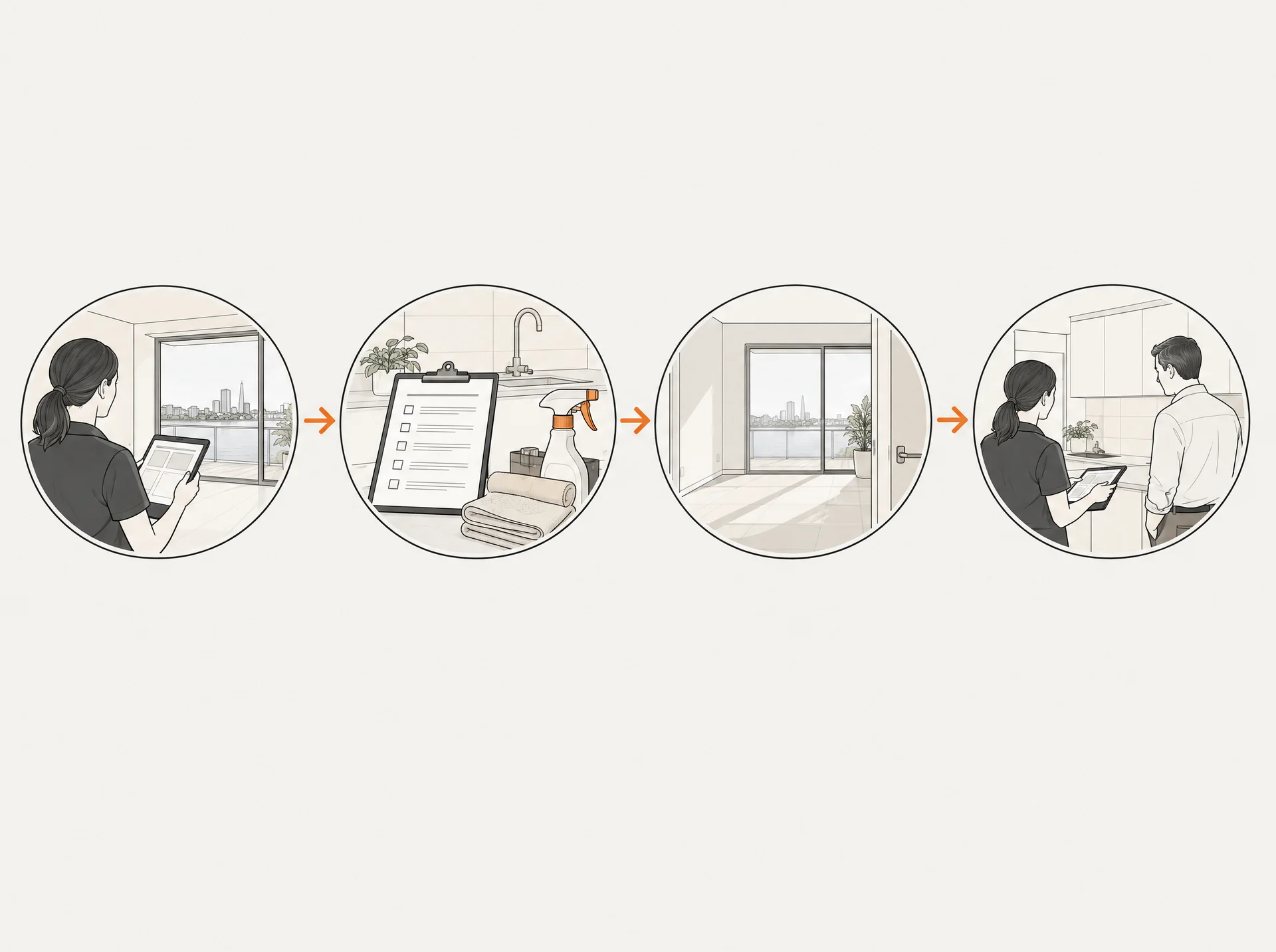
Compare the property with its condition record
Review the entry-condition information and any supplied handover checklist. Walk through the empty or nearly empty property and record the work that is needed. This helps separate cleaning from damage, wear and repairs.
A cleaning scope cannot determine every tenancy or bond issue. The practical aim is a defined list of tasks that can be completed and checked before handover.
List the inclusions explicitly
Kitchens and bathrooms often need detailed attention, but appliance interiors, cupboard interiors, window tracks, screens and external areas should not be assumed to be included. List them by room and identify any access limitation.
Carpet and upholstery treatment may need its own method and drying time. Window cleaning may need separate access arrangements. Rubbish, furniture and abandoned items should have a clear removal plan.
- Kitchen: nominated surfaces, cupboards and appliances.
- Bathrooms: fixtures, tiles, screens and accessible fittings.
- Living areas: floors, skirtings and specified marks.
- Additional tasks: carpets, glass, exterior areas and waste.
Record stains and damaged finishes before cleaning
Some marks are permanent colour changes, scratches or wear. Loose grout, failed sealant and water damage may require a repair trade. Photographs help establish the starting condition and avoid confusing a cleaning limit with an unfinished task.
Provide care information for timber, stone or other delicate surfaces. A stronger product or more aggressive method is not automatically appropriate.
Prepare access and utilities
Confirm key collection, parking, lift access and the availability of water and electricity. Remove belongings that prevent access to the agreed areas. Coordinate repair trades before the final clean where possible.
Allow enough time to inspect the result and communicate any task that needs attention before returning keys. A deadline on the same afternoon as the clean leaves little room for an unexpected access or condition issue.
A planning example: the oven and carpet are unclear
Suppose one quote says full vacate clean and another lists rooms but excludes the oven and carpet treatment. The labels alone do not tell you whether the scopes are equivalent. Ask each provider to confirm appliance interiors, carpet method, windows and any other items needed for the property. Compare the written inclusions before comparing the totals.
Then identify anything that prevents access: belongings in cupboards, furniture on carpet or a repair trade still working in a room. Agree whether those items will be moved and by whom. A clear scope does not help if the required surfaces are inaccessible on the day.
Build a sequence that leaves time for inspection
Arrange removal of belongings and rubbish, then any approved repair or paintwork, followed by the final clean. Carpet work, wet surfaces or newly finished materials may need time before normal access; confirm the relevant requirements with the provider rather than setting a universal drying period.
Schedule a review while access to the property is still available. Use the task list to identify any agreed work that needs attention. Keep communication specific: the kitchen cupboard interior, a particular window track or the nominated carpet area is easier to review than a broad statement that the clean is unacceptable.
Record condition without promising a tenancy outcome
Photographs can distinguish the condition before and after the cleaning scope, especially where a stain, scratch or worn finish was recorded in advance. Take a wide view to locate the area and a closer view to show the detail. Retain the agreed task list and completion record with the handover information.
Consumer Protection’s property-condition-report guidance explains the role of the entry and final reports. A cleaner’s checklist is useful evidence of the work undertaken, but it does not decide liability for damage or the return of a bond. Resolve those questions through the applicable tenancy process rather than treating an advertising guarantee as a substitute.
- Written inclusions, exclusions and known condition limits.
- Keys, utilities, parking and clear access.
- Repairs and removal completed before the final clean where practical.
- Time to review tasks while access remains available.
- Photos and completion information retained with the handover record.
Can a cleaner promise that the bond will be returned?
The bond outcome includes matters beyond cleaning. A useful agreement states the cleaning tasks, known limitations and a process for reviewing the completed work. It should not imply control over a landlord’s or agent’s wider assessment.