Your project, in focus.Explore the details
What we can help with.
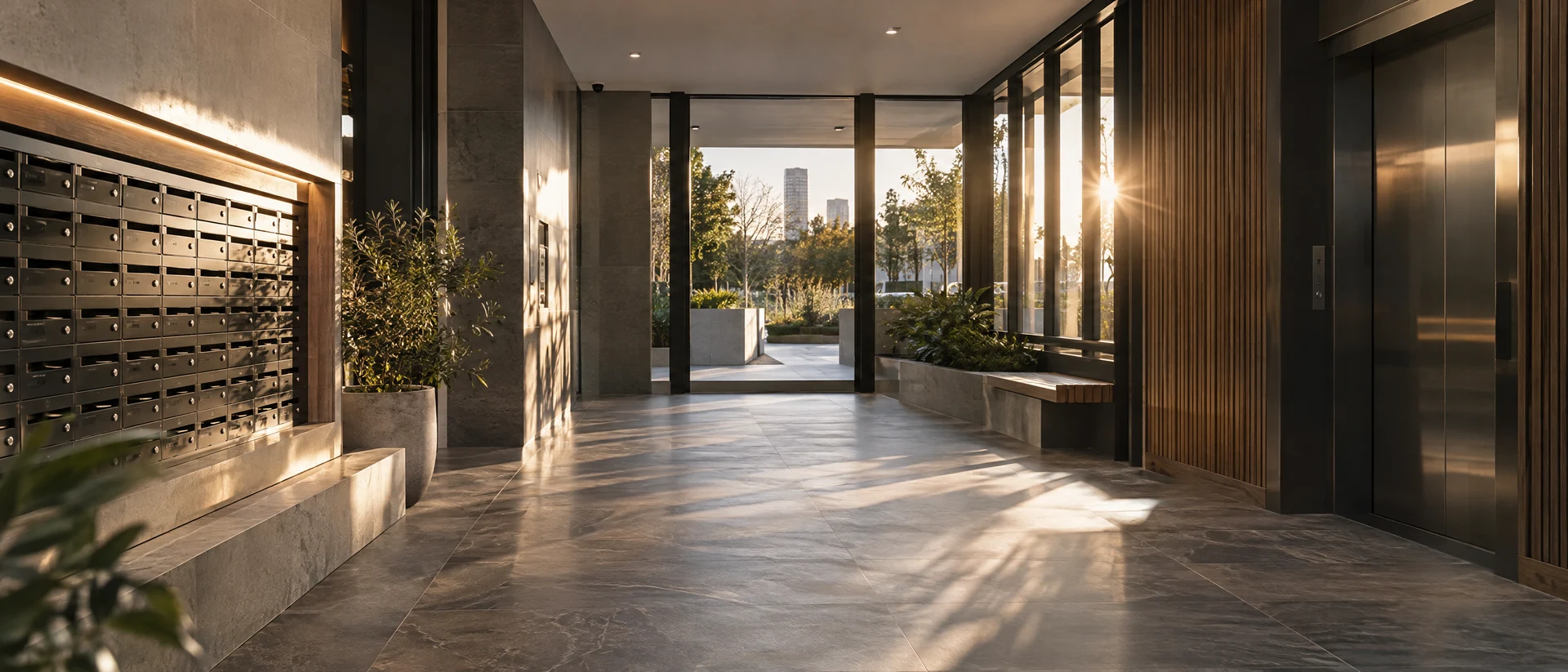
- Foyers, corridors, stairs, lift interiors, amenities and agreed outdoor areas.
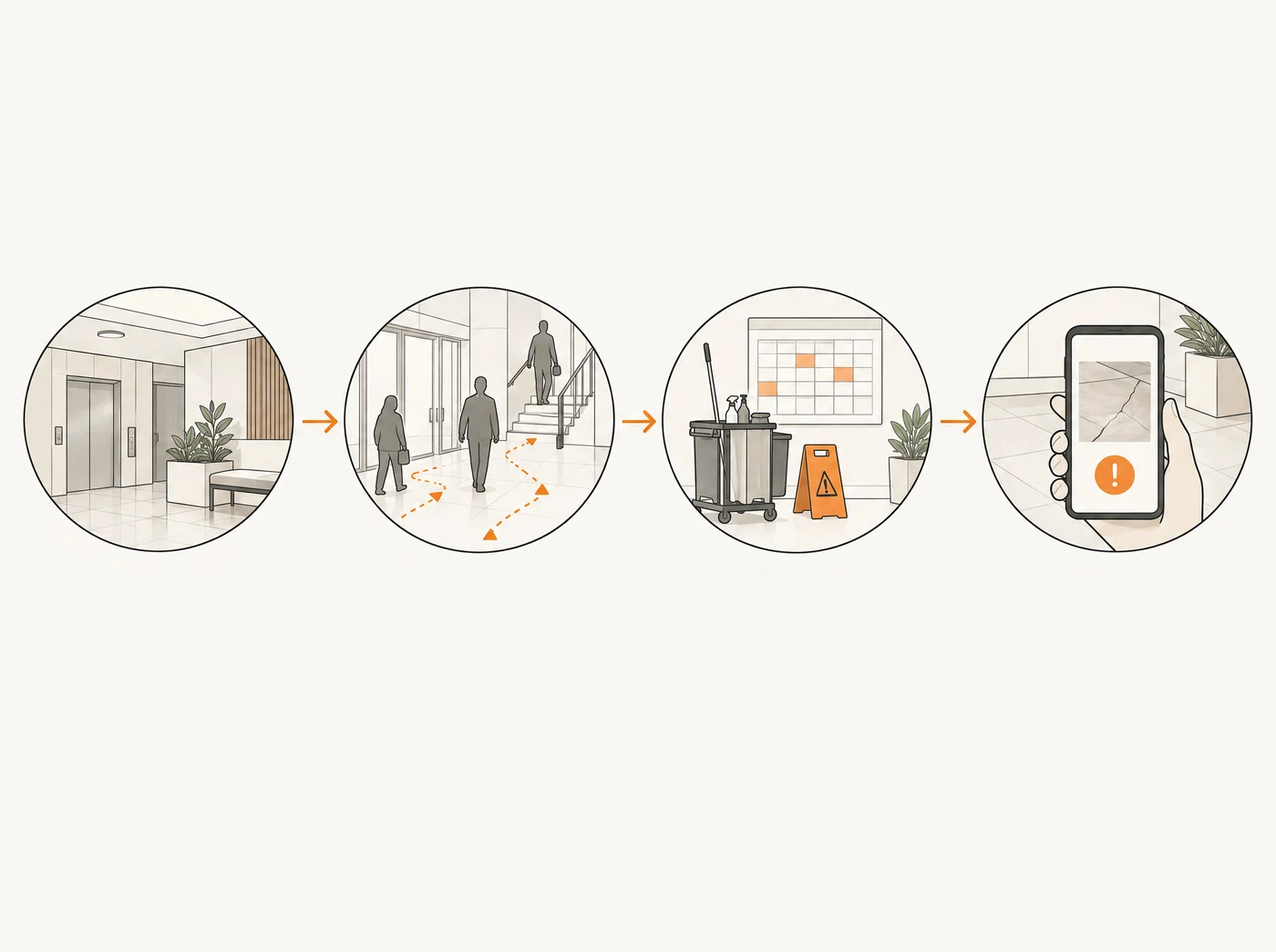
- Set the task list around the building’s layout and foot traffic.
Scope and site details
- Use a common-property plan to define the areas included.
- Private balconies, individual lots and specialist plant areas should not be assumed part of a shared-area clean.
- Bin handling, consumables and periodic tasks need explicit allocation.
- Resident access, noise and wet-floor management should be planned around the building’s actual use.
What matters for your job.
- High-use entryways and quieter upper-floor areas may need different attention.
- Slip risk during cleaning, noise and resident movement affect timing.
- Specialist areas and private lots should be clearly separated from the common-area scope.
Before we visit.
- Common-area plan
- Resident and visitor traffic
- Keys and building access
- Approved tasks and reporting contact
More to consider
- Provide a common-property plan, access procedures and the strata contact.
- Agree bin handling, consumables and how defects or spills are reported.
- Record periodic tasks so they are not lost within a general recurring clean.
A clear handover.
- Review completion by building zone and note any access issue, spill or defect requiring the manager’s attention.
- Keep periodic tasks visible in the record.
- Use resident feedback with the agreed scope so changes can be approved and communicated consistently.
Can the schedule change when occupancy or traffic changes?
- Yes.
- Review the task frequencies against observed use and recorded issues, while keeping the approved scope and budget clear to the strata manager.
How should residents report a missed area or spill?
- Report the location and time through the agreed building-management channel so a missed task can be distinguished from a new spill.
- Follow the building’s procedures for urgent hazards. A shared record helps the manager review timing and frequency.