Your project, in focus.Explore the details
What we can help with.
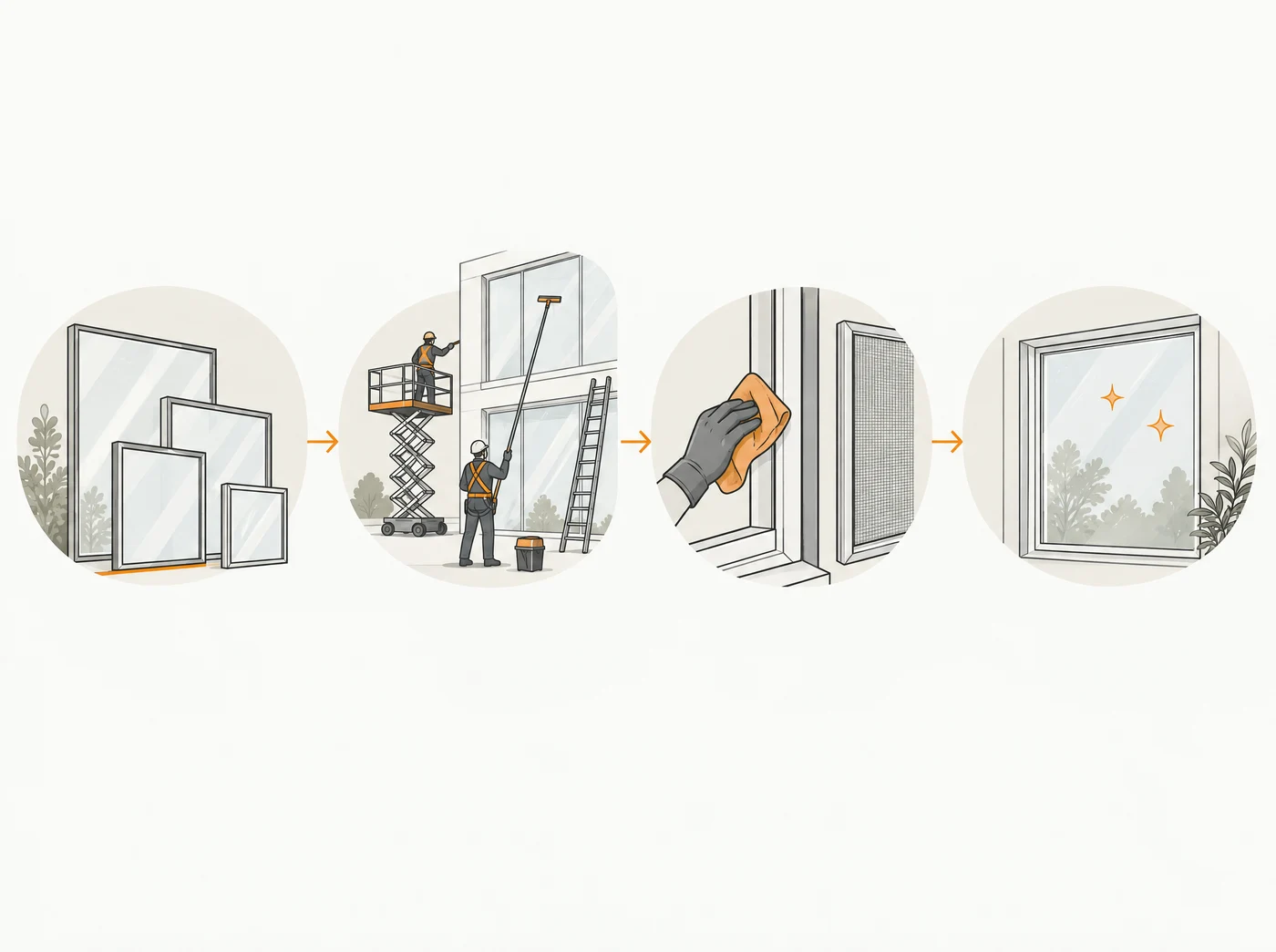
- Specify internal and external glass, screens, tracks and frames.
- Assess high glass, fixed panels and difficult access before quoting.
Scope and site details
- Specify internal and external faces, frames, screens and tracks.
- High-level glass, roof glazing and fixed panels may need a separate access method.
- Hard-water deposits, construction residue and damaged coatings should be assessed before inclusion.
- Window cleaning should not be presented as repair of scratched glass, failed seals or damaged frames.
What matters for your job.
- Mineral deposits, construction residue and damaged coatings are different from ordinary dirt.
- Glass type and condition influence the method.
- Screens and security grilles can change access and the time required.
Before we visit.
- Window count and storeys
- Screens or security grilles
- Interior and exterior access
- Staining or coating concerns
More to consider
- Provide photos, storey count and a list of included areas.
- Identify fragile landscaping, furniture near windows and access restrictions.
- Agree whether tracks, screens and hard-water treatment are included.
A clear handover.
- Review the included glass, frames, tracks and screens where applicable.
- Identify inaccessible faces and pre-existing damage separately.
- Changes in sunlight can reveal marks, so agree a reasonable review process without treating etched or scratched glass as a cleaning omission.
Will cleaning remove scratches or failed double-glazing seals?
- No.
- Scratches, etched surfaces and moisture between panes need a different assessment.
- Cleaning can reveal those conditions but does not repair the glazing.
Can windows be cleaned when access is restricted?
- The method depends on the building and glass. Furniture, landscaping, roofs and neighbouring boundaries can restrict access.
- Send photos early. Agree accessible faces, specialist work and any omissions in the completion record.