Your project, in focus.Explore the details
What we can help with.
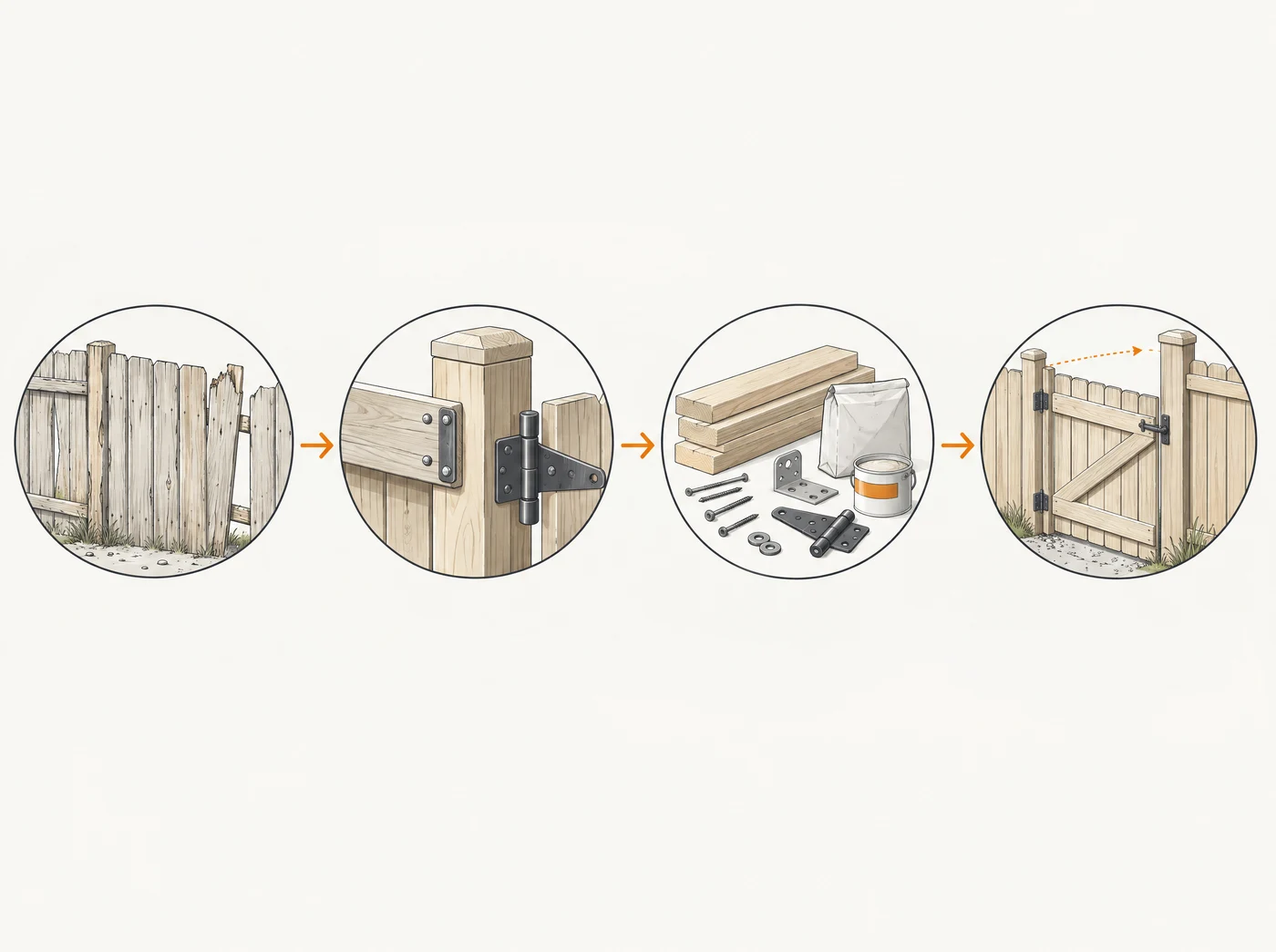
- Repair posts, hinges, latches, panels and alignment.
- Check the supporting structure as well as the visible damage.
Scope and site details
- State the panels, posts, gate hardware and disposal included.
- Ground conditions, corrosion or deteriorated neighbouring sections can affect a local repair.
- Boundary approval and material matching need resolution before work starts.
- Pool barriers and automated gates require the relevant specialist requirements to be addressed; a general fence repair should not imply those checks have automatically been completed.
What matters for your job.
- A sagging gate may involve its frame, post footing or hardware.
- Material availability and matching existing panels can influence the finish.
- Automated gate equipment requires coordination with the relevant specialist.
Before we visit.
- Both sides where access is authorised
- Lengths and material type
- Post or footing damage
- Boundary and approval contacts
More to consider
- Share photos from both sides where access is authorised, approximate lengths and the material type.
- Establish boundary and approval responsibilities.
- Identify pool barriers or other regulated barriers before any work is scoped.
A clear handover.
- Check the repaired panels, posts, latch and gate movement within the agreed scope.
- Record matching-material limitations and any adjacent deterioration.
- If the fence forms a regulated barrier, retain the relevant specialist assessment rather than assuming a general repair establishes compliance.
Can one damaged panel be replaced without changing the whole fence?
- Often, where the surrounding structure is sound and a suitable replacement is available.
- Matching appearance and the condition of adjacent supports need inspection.
Why does a repaired gate keep sagging?
- Hinge or latch adjustments may leave movement in the post, footing or gate frame unresolved.
- Review the whole assembly and previous repairs, then distinguish hardware adjustment from supporting-structure repairs.