Your project, in focus.Explore the details
What we can help with.
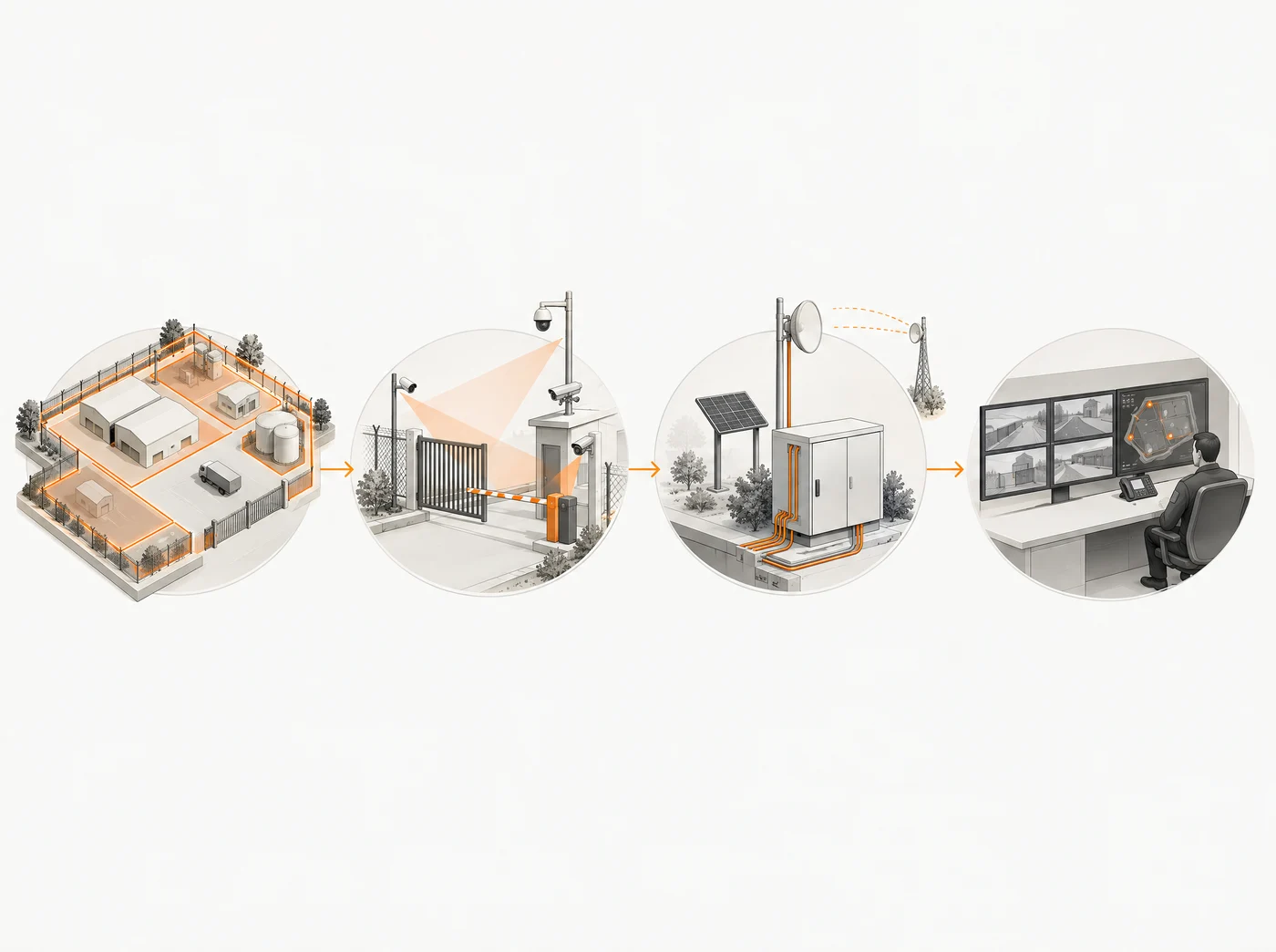
- Coordinate security across vehicle entries, staff access, loading areas and equipment zones.
- Plan cameras, gate access, credentialed doors and network links across the buildings involved.
Scope and site details
- Set boundaries by site zone and system function.
- Yard coverage, gate authorisation, building entry and remote storage may need different equipment and providers.
- Hazardous or restricted work areas require their own site conditions to be understood.
- Include access equipment, protected cable routes and ongoing maintenance access so the design remains serviceable after the first installation.
What matters for your job.
- Dust, glare, long distances and moving vehicles influence equipment placement.
- Cabling protection, mounting access and maintenance access need consideration alongside coverage.
- Recording objectives may differ between a yard overview and a controlled entrance.
Before we visit.
- Site zones and vehicle routes
- Critical entry and camera locations
- Network links and available power
- Induction and access requirements
More to consider
- Provide a site layout showing traffic routes, existing communications links and areas with special access conditions.
- Establish induction requirements and shutdown windows.
- Identify which systems must remain operational during a staged changeover.
A clear handover.
- Check the system against real site movements, including the nominated vehicle approach and staff entrances.
- Record which equipment depends on each building link and power source.
- The handover should include operating responsibility, maintenance access and the agreed response when a component is offline.
Can a warehouse and detached yard share one system?
- Potentially.
- The design needs a suitable communications path, power arrangements and equipment appropriate for each location.
- Distance alone does not determine the right connection.
Can work be staged without closing the whole site?
- A staged plan may keep unaffected areas operating. Existing infrastructure and isolation requirements determine what is practical.
- Identify functions that cannot stop together. Agree temporary procedures and change windows, then verify each stage before moving on.