Start with roles and doors
A credential proves or represents a user’s permission to enter. Before choosing its format, map which groups need which doors and at what times. Staff, cleaners, contractors and visitors may need different schedules or expiry dates.
Assign an owner for access administration. A convenient reader is of little help if nobody knows who can issue a credential, remove one or recover an administrator account.
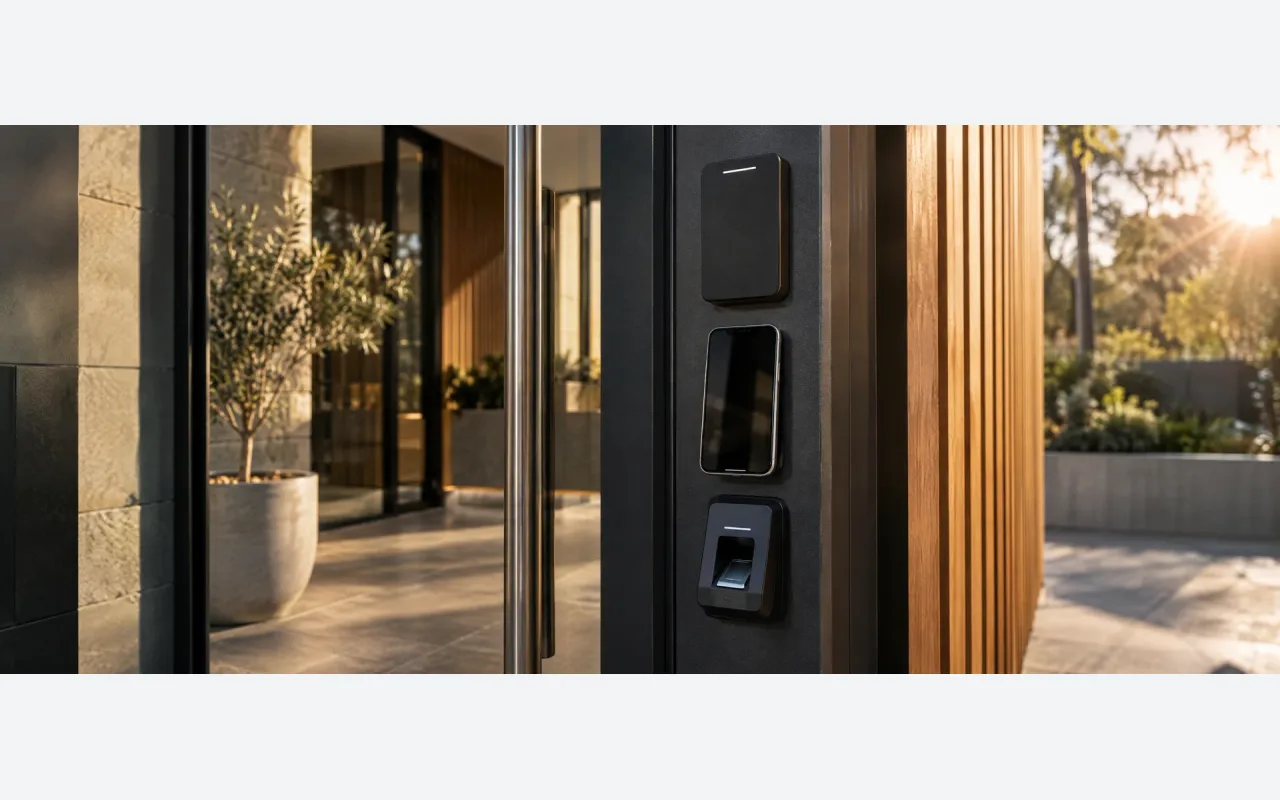
Cards and fobs
Cards and fobs provide a separate physical credential that can be issued to an individual. They can suit workplaces where personal phones are not used for access. Compatibility and credential security depend on the selected system.
Consider the issuing process, replacements, spare stock and revocation. A lost credential should lead to removal of that credential’s permission, rather than a shared-code change for everyone.
Mobile credentials
Mobile access can reduce the need to carry another item, but it introduces device and account questions. Confirm phone compatibility, any app or subscription requirement and what happens when a phone is replaced, flat or unavailable.
Provide an alternative for people who cannot use the chosen mobile method. Decide whether the organisation or individual owns the required account and how access is removed when someone leaves.
Face and fingerprint readers
Biometrics require a more detailed privacy and operational assessment. Enrolment, storage, deletion, reader conditions and alternatives should be planned before anyone’s biometric information is collected.
The OAIC’s facial-recognition guidance explains privacy-risk assessment considerations. The right legal basis and obligations depend on the organisation and proposed use; a product feature alone does not settle those questions.
Test the whole credential lifecycle
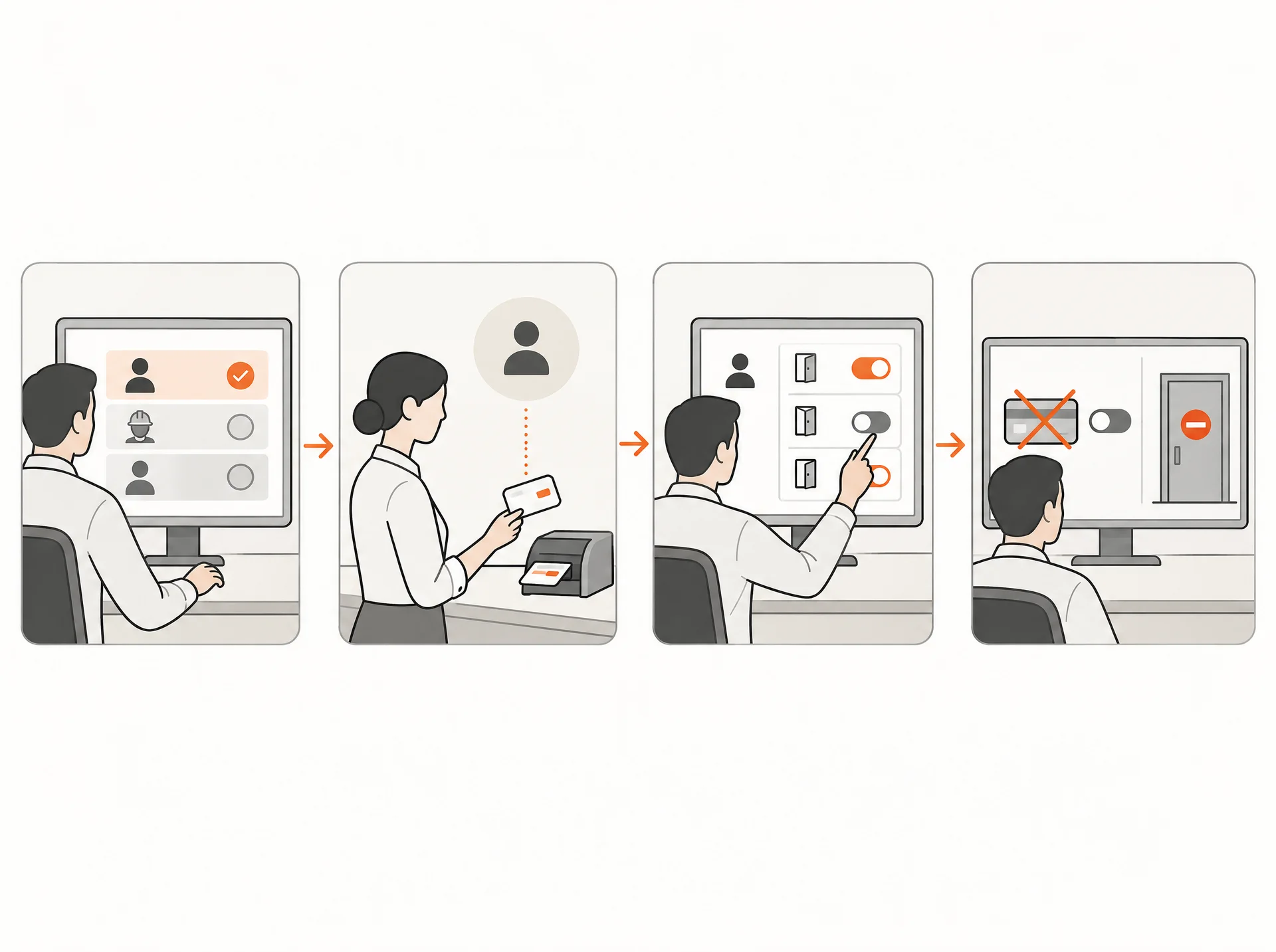
Demonstrate a new user, a changed role, an expired visitor and a lost credential. Include a failed read and a user who needs an alternative method. Test the door’s actual operation as well as the software screen.
- Issue: confirm identity and approved access.
- Use: check the intended doors and schedules.
- Change: update roles without unnecessary access.
- Remove: revoke credentials and retain appropriate records.
Compare the everyday tasks, not only the reader
For a card or fob, consider the issue and return process, spare stock and what happens when one is lost. For mobile access, consider phone compatibility, account setup and an alternative when a device cannot be used. For biometrics, examine enrolment, information handling and a usable alternative before deciding that a reader feature is necessary.
Ask the supplier to demonstrate the options on the exact proposed platform. A product family can support several methods while a particular reader, licence or deployment supports fewer. Record any recurring charge and the responsibilities of the business, user and provider for each option.
A planning example: staff, cleaners and temporary contractors
Imagine an office where employees need routine entry, a cleaning team attends in an agreed window and a contractor needs access for one visit. Create those three roles before issuing credentials. The intended doors, times and expiry can then be reviewed without treating every person as a permanent staff member.
Assign an approver for each request and a person responsible for removing it. A shared code may feel convenient at first, but it makes individual removal and accountability harder to manage. The chosen solution should be assessed against the organisation’s needs rather than assuming one credential method suits every role.
Include door behaviour and administrative recovery
An accepted credential is only one part of access. The door, lock, closer, request-to-exit arrangement and any connected systems must also behave as intended. Ask the installer to define what will be tested on the physical door and what happens during a relevant fault or interruption. Any required life-safety behaviour needs assessment for the actual building.
Administrative recovery matters too. Decide what happens when the usual administrator is away, leaves the business or loses access to an account. Keep an authorised recovery process, record ownership and verify the ability to revoke a credential. A successful handover should demonstrate the lifecycle without giving every staff member broad administrator rights.
- Named approver and administrator.
- Door groups, permitted times and expiry.
- Alternative entry method for eligible users.
- Lost-device or lost-card removal process.
- Account recovery and provider access boundaries.
Can several credential types coexist?
Many systems support a combination, but the exact options depend on the hardware, software and licences. Confirm the supported combination and use a consistent approval process across all methods.