Your project, in focus.Explore the details
What we can help with.
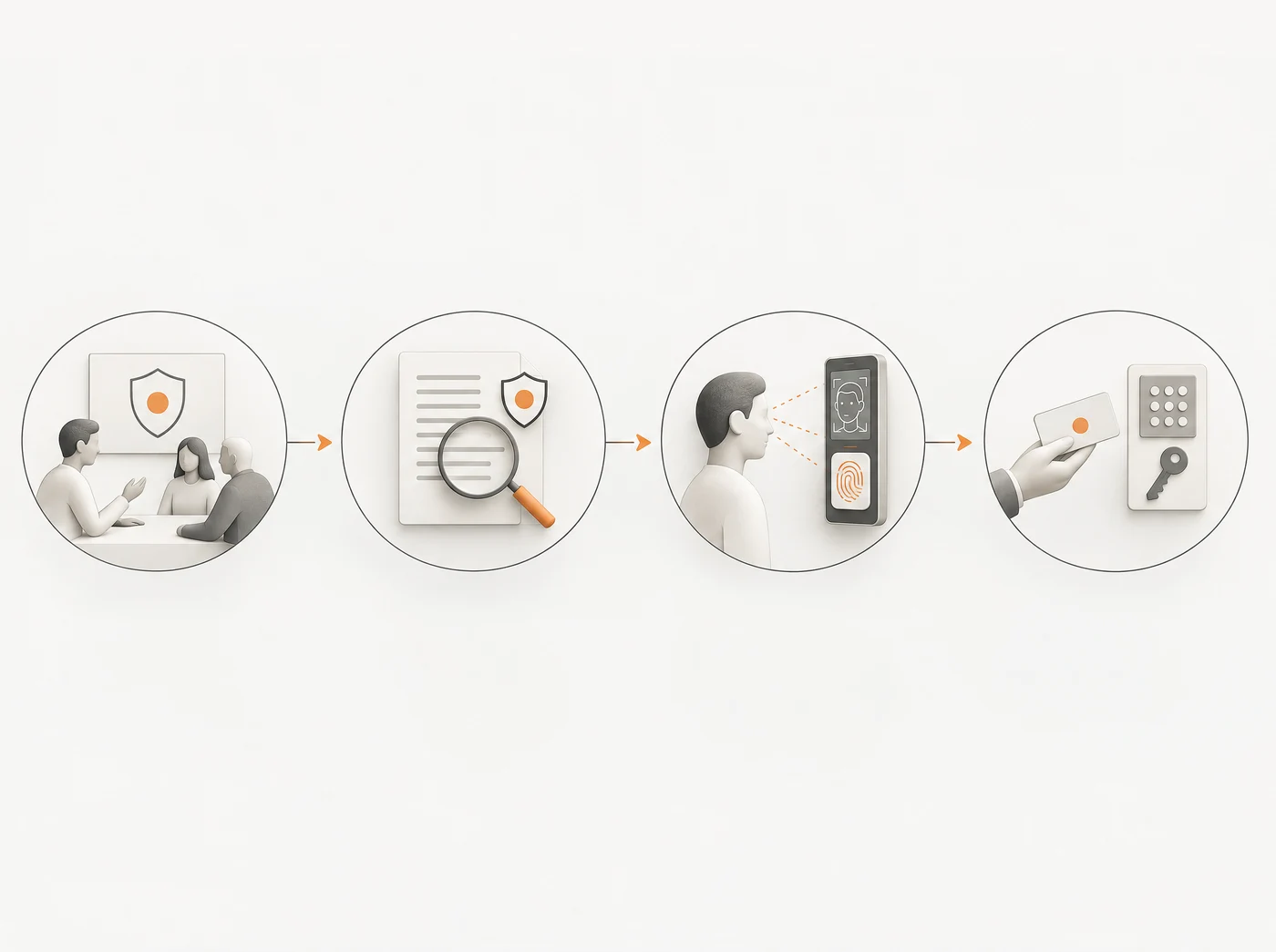
- Biometric entry planned around enrolment, daily use and responsible record handling.
- Include an alternative entry method for people or situations where biometric use is unsuitable.
Scope and site details
- Specify whether the system performs verification against an enrolled user or another supported identification process.
- The distinction affects the purpose and information handling.
- Enrolment stations, network connections and ongoing administration belong in the scope.
- Avoid collecting real biometric information for a casual sales demonstration; the organisation needs an agreed privacy and operational process before enrolment starts.
What matters for your job.
- The convenience of a reader must be weighed against lighting, gloves, accessibility and privacy obligations.
- Decide whether biometric identification is necessary for the entry point and how its performance will be checked in real conditions.
Before we visit.
- Purpose for using biometrics
- User groups and entry conditions
- Proposed data owner and administrator
- Alternative credential requirements
More to consider
- Before selecting hardware, assign responsibility for consent or another lawful basis where relevant, retention, deletion and staff communication.
- Obtain appropriate privacy advice for the intended use.
- Do not collect biometric data as a demonstration without an agreed process.
A clear handover.
- Trial the agreed access process with authorised participants under normal entry conditions.
- Verify the fallback method and how enrolment data is removed when required.
- Keep the privacy and operating responsibilities separate from the hardware installation record so each has a clear owner.
Should biometrics be the only way through the door?
- A fallback credential or approved entry process should be considered.
- It helps manage failed reads, accessibility requirements and people who cannot use the biometric option.
Will gloves, sunlight or a changed appearance affect entry?
- They can affect some readers. Trial the intended equipment on site with authorised users, normal work clothing and typical lighting.
- Provide an alternative access method. A showroom demonstration does not establish performance at every entrance.