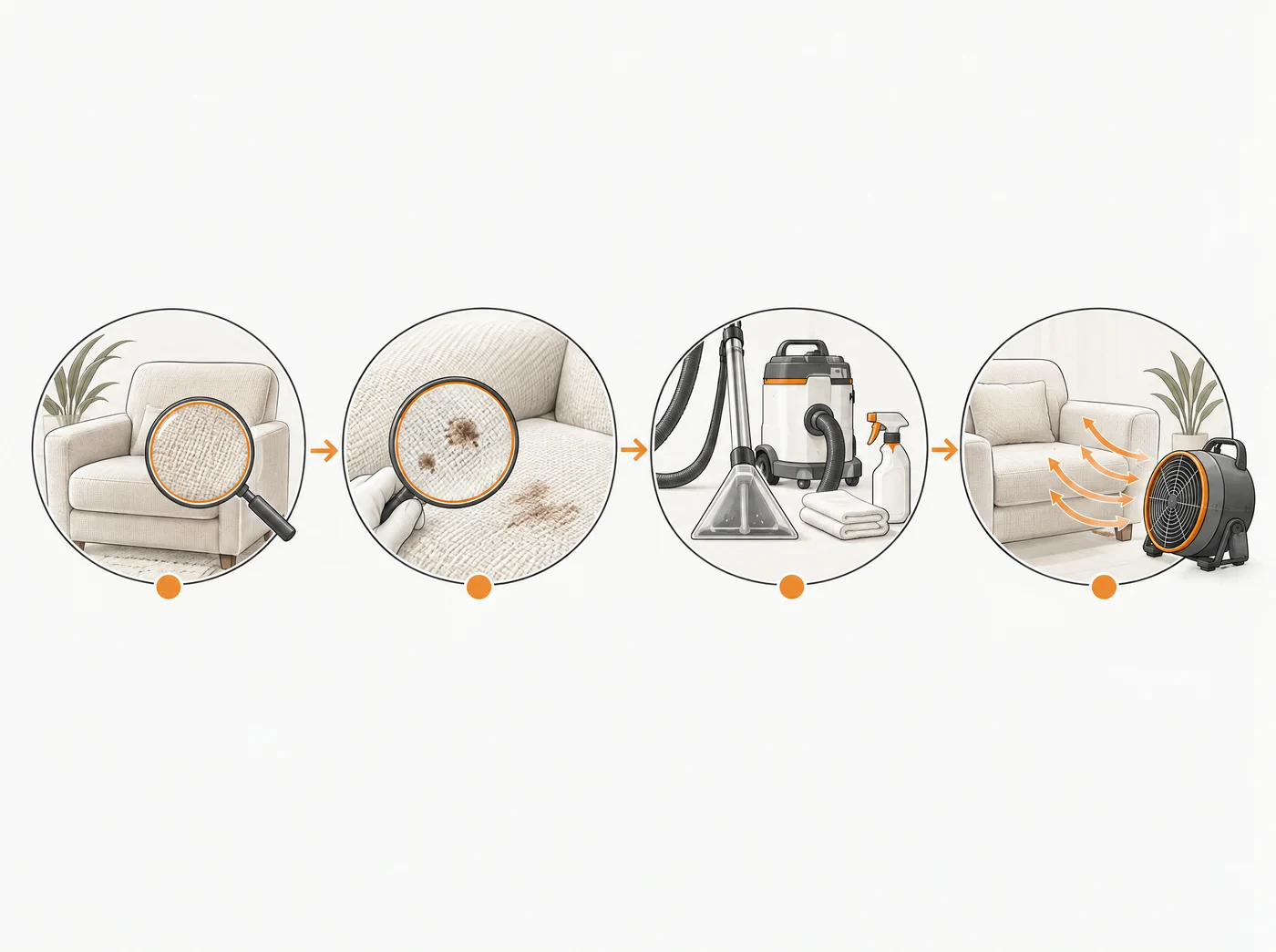
Your project, in focus.Explore the details
What we can help with.
- Assess the material, stains and existing damage before treatment.
- Choose a method suited to the fibre, backing, dyes and construction.
Scope and site details
- Agree each carpeted area or upholstered item, its material where known and any pre-existing damage.
- Furniture moving, spot treatment and odour concerns need explicit discussion.
- Drying arrangements depend on the method and conditions.
- Delicate, unstable or unknown fabrics may need a specialist assessment before a treatment can be offered.
What matters for your job.
- A visible mark may be removable soil, permanent colour change or wear.
- Drying conditions and access affect scheduling.
- Delicate or unknown fabrics need assessment before a treatment is proposed.
Before we visit.
- Care labels and material details
- Area or item count
- Stain history and previous products
- Access and drying conditions
More to consider
- Provide care labels where available, photos and the approximate area or number of items.
- Mention previous treatments and pets.
- Agree furniture movement, access and the time needed before normal use resumes.
A clear handover.
- Review the agreed areas once their condition can be assessed appropriately and follow the supplied drying advice.
- Record stains that remain and any pre-existing damage.
- Avoid judging a delicate fabric treatment solely by how wet it feels immediately after cleaning.
Can every stain be removed?
- No.
- Results depend on the substance, fibre, age and earlier treatment.
- Assessment should distinguish a reasonable cleaning outcome from damage that cleaning cannot reverse.
Can the room be used immediately afterwards?
- Drying time depends on the method, material, ventilation and weather.
- Follow the job-specific advice for walking on damp surfaces and replacing furniture. Allow time before an event or handover.