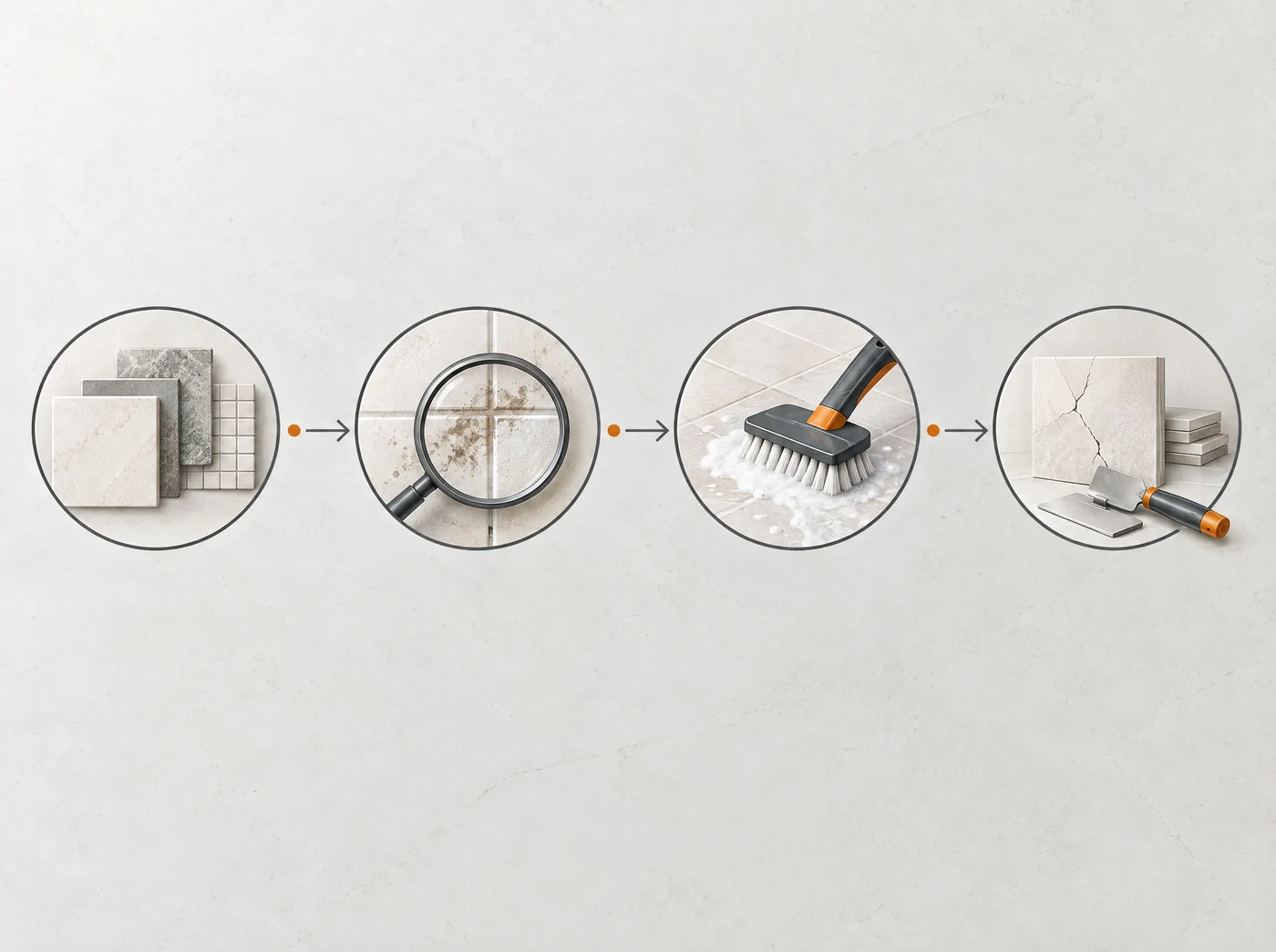
Your project, in focus.Explore the details
What we can help with.
- Clean built-up soil and deposits from kitchens, bathrooms and tiled floors.
- Check the material and any damaged grout or sealant before treatment.
Scope and site details
- Define the tile and grout areas, their materials and the expected treatment.
- Damaged grout, loose tiles, sealant replacement and waterproofing work should be separate.
- Existing sealers can affect method selection.
- Recurring staining or dampness needs a cause review so the cleaning result is not presented as a repair to the building envelope.
What matters for your job.
- Natural stone, glazed tile and different grout products need compatible cleaning methods.
- Discolouration caused by a leak or failing waterproofing needs investigation beyond cleaning.
- Damaged grout may require repair.
Before we visit.
- Tile material and sealed surfaces
- Stain and damage photographs
- History of leaks or dampness
- Areas requiring repair as well as cleaning
More to consider
- Provide photos and details of any sealers or prior treatments.
- Identify loose tiles, cracked grout and recurring dampness.
- Agree which areas are included and whether repairs or resealing are a separate scope.
A clear handover.
- Review the cleaned areas and identify remaining discolouration or damaged grout.
- Record any moisture concern that needs further assessment.
- If resealing or repair is required, scope it separately rather than implying that cleaning has restored waterproofing.
Will cleaning stop mould from returning?
- It may remove surface contamination, but recurring moisture and ventilation issues need attention.
- Cleaning alone does not establish that the underlying cause has been resolved.
Does sealing grout mean it will never stain again?
- No. A suitable sealer may help with care, but product choice, application and regular cleaning still matter.
- Confirm whether sealing is included. Cracked grout and moisture problems need their own repairs or investigation.