Your project, in focus.Explore the details
What we can help with.
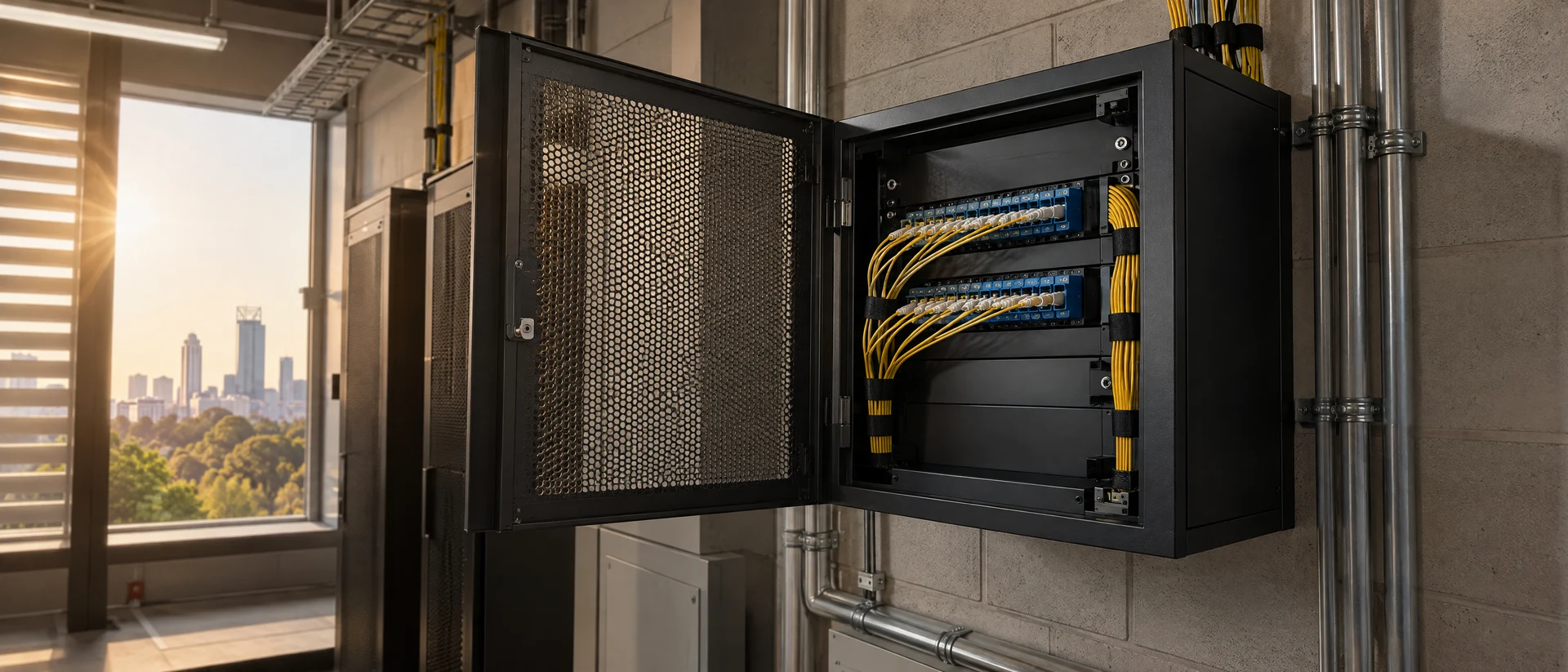
- Connect racks, floors or separate buildings with fibre.
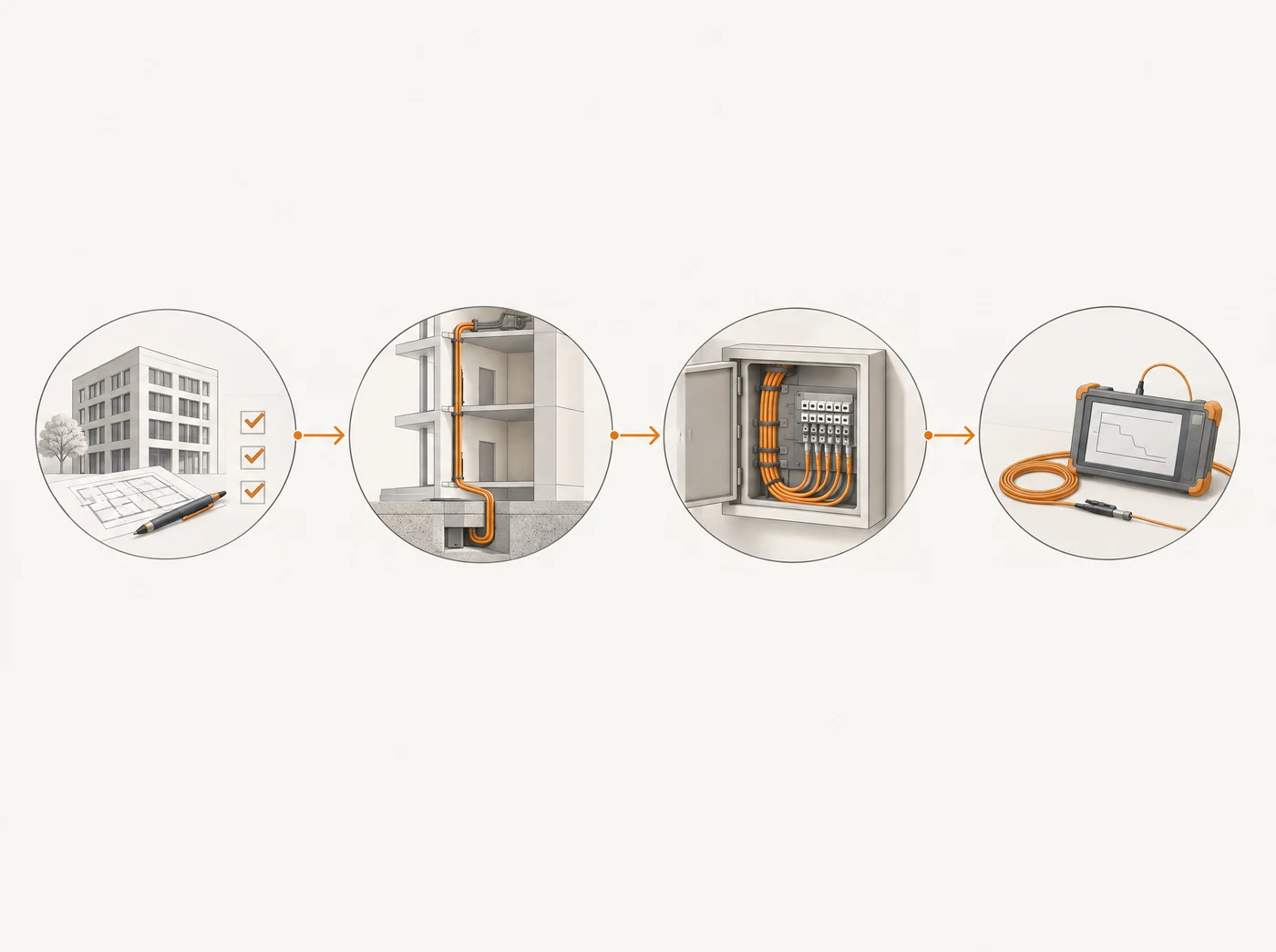
- Plan pathways, cable type, terminations, optical modules and link testing.
Scope and site details
- Define the pathway, fibre count and type, termination hardware, optics and tests included.
- Civil work, conduit repair and building penetrations may be separate.
- Existing records should be checked against the route found on site.
- Fibre provides a physical link; the switch ports and optical modules still determine how that link connects to the wider network.
What matters for your job.
- The physical route and installation environment are as important as the desired data rate.
- Existing ducts, bends, access pits and building entry points can influence the work.
- Compatible optics are needed at both ends.
Before we visit.
- Building and pathway plans
- Distances and required endpoints
- Existing ducts or fibre records
- Desired link capacity and spare provision
More to consider
- Provide site plans and any existing conduit records.
- Establish permissions for shared areas or excavation.
- Agree labelling, test records and spare capacity before installation.
A clear handover.
- Retain the link labels, termination details and applicable test results.
- Confirm the installed optical modules are identified at both ends.
- Record spare fibres and route information where available, making later expansion or fault isolation easier to plan.
Can fibre connect to ordinary copper network ports?
- A suitable optical interface or conversion device is needed.
- The design should list the supported modules and equipment at each end.
Should spare fibres be included for future use?
- Spare cores can help where a route is costly or difficult to revisit, provided the allowance reflects realistic needs.
- Record unused cores and terminations. A spare fibre does not include the equipment or configuration for a future service.