Your project, in focus.Explore the details
What we can help with.
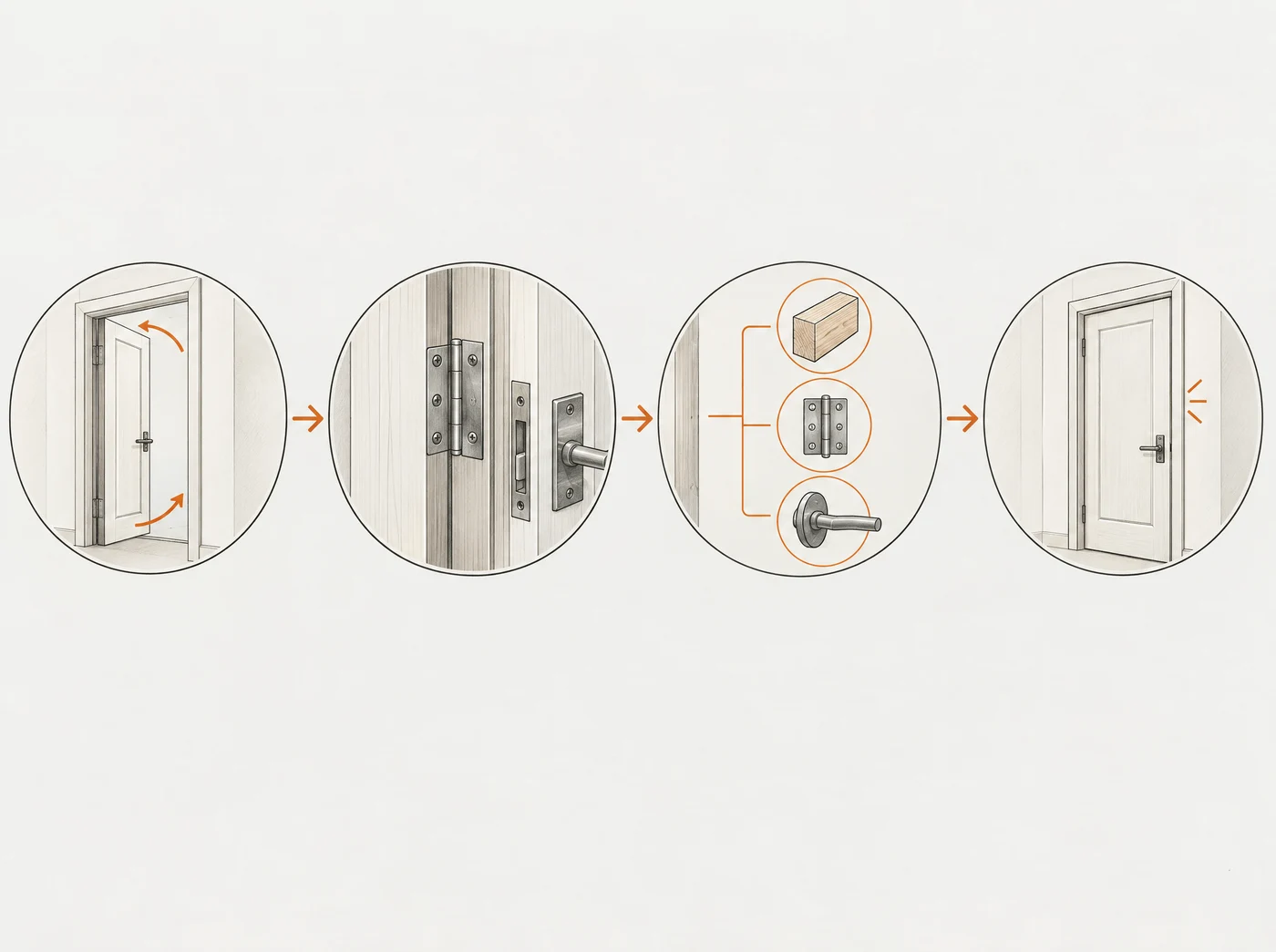
- Sticking doors, damaged trims, worn hardware and minor timber repairs.
- Assess alignment, moisture and frame condition before choosing the repair.
Scope and site details
- The carpentry scope should identify the component, hardware and finish included.
- A repair to a standard internal door differs from work on a rated, security or access-controlled door.
- Frame movement, water damage and unavailable matching timber may affect the options.
- Include lock or reader coordination where an adjustment could change how the door closes or secures.
What matters for your job.
- A door that rubs may need adjustment, hardware work or investigation of movement.
- Security doors, fire doors and specialised assemblies may have additional requirements and should not receive arbitrary modifications.
Before we visit.
- Whole-door and detail photographs
- Type of lock and closer
- History of rubbing or movement
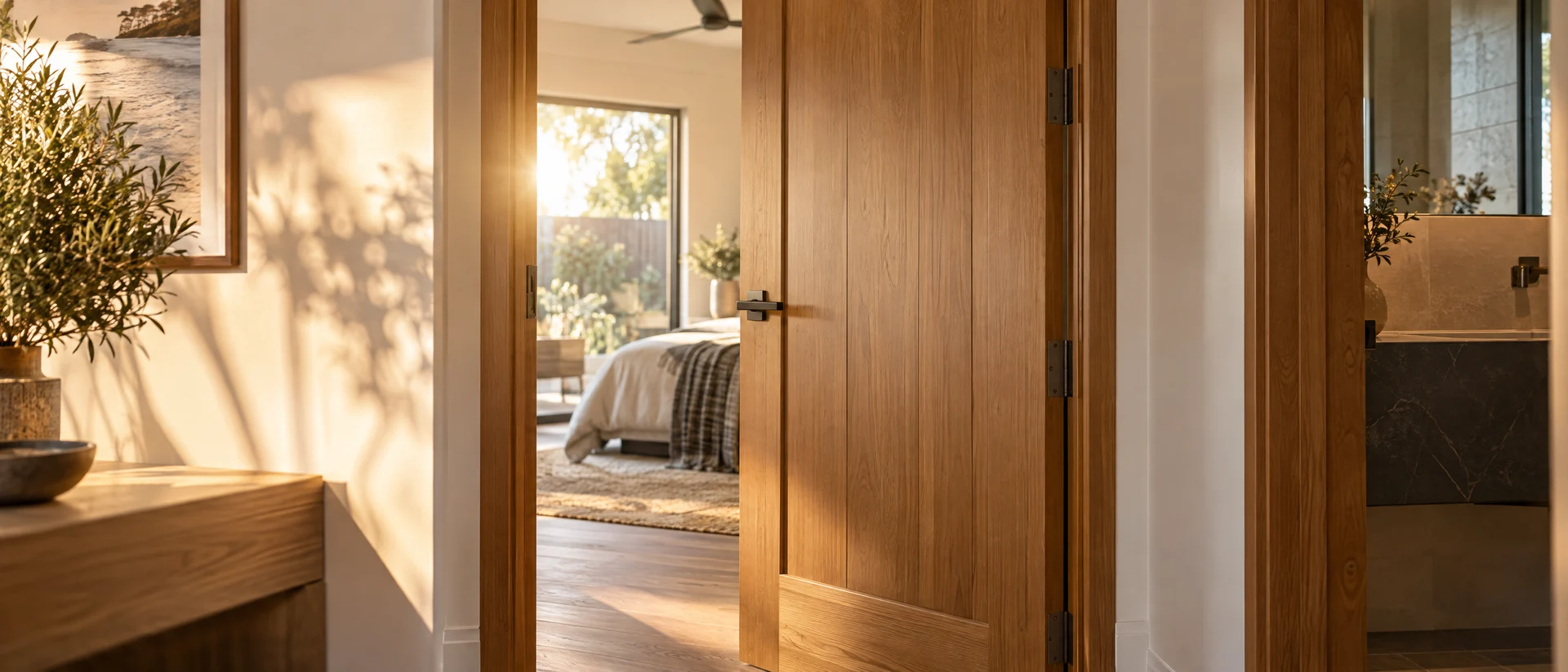
- Finish to retain or match
More to consider
- Provide photos of the full door, frame and affected area.
- Describe whether the problem is seasonal or recent.
- Confirm matching finishes and any access-control hardware that must remain coordinated.
A clear handover.
- Operate the repaired door through opening, closing and latching.
- Check the agreed finish and any interaction with locks or access-control hardware.
- Keep a record of replaced parts and identify specialist requirements that remain with another provider.
Can a sticking door be trimmed immediately?
- The cause should be checked first.
- Removing material may not solve hinge movement, moisture or frame distortion and can affect the way the door latches.
Can a damaged door be repaired instead of replaced?
- Repair depends on the door’s construction, damage and required function. A cosmetic defect differs from a split frame or damaged specialist assembly.
- Compare the finished appearance and operation as well as cost. A retained door still needs to perform its intended job.